
SEPTIC PROBLEM RESOURCE
Septic Problems & Repair Guide
Septic problems generally show up as one of a few patterns: sewage backups, signs of system failure, drain field warning signs, odors, or slow drains, and each can stem from a full tank, a blocked line, or a struggling drain field. This guide walks through these symptom categories and links to a detailed article for each, along with how repair and replacement decisions are typically evaluated.
- Understand common septic system service and maintenance considerations
- Explore problems, inspections, pumping, drain fields, installation, and replacement
- Use detailed supporting articles for specific questions
- Confirm pricing and availability directly with the provider
Symptoms Are Clues, Not a Diagnosis
The symptoms described throughout this guide are useful for describing a problem accurately when you contact a professional, but they aren’t a reliable way to diagnose the exact cause yourself. A full tank, a blocked line, and a struggling drain field can all produce similar-looking symptoms, and telling them apart generally requires an in-person inspection rather than matching a description to a cause.
IMAGE PLACEHOLDER Filename: septicserviceco-septic-problems-repair-guide-symptoms.png Alt: Common septic symptoms are clues not diagnoses Image idea: Infographic showing slow drains, odors, backups, alarms and wet areas as symptoms with multiple possible causes.What Causes Septic Backups
A backup happens when wastewater can’t flow out of the house as intended and instead returns through drains or toilets, and it can be caused by an overfull tank, a blocked main line, root intrusion, a failing drain field, or structural damage to the tank or pipes. Which of these applies affects whether the fix is routine pumping or something more involved.
See What Causes Septic Backups? for these causes in more detail.
IMAGE PLACEHOLDER Filename: septicserviceco-septic-problems-repair-guide-repair.png Alt: Septic repair versus replacement evaluation Image idea: Decision graphic showing professional diagnosis, component condition, soil treatment area condition, system design and applicable requirements guide repair/replacement decisions.Signs of Septic System Failure
System failure means the system can no longer safely treat and dispose of wastewater, which is a different situation than a tank simply being due for routine pumping. Recurring backups, standing effluent in the yard, persistent odors, and slow drains that don’t improve after pumping are signs that point toward failure rather than a routine service need.
See Signs of Septic System Failure for how to tell the difference.
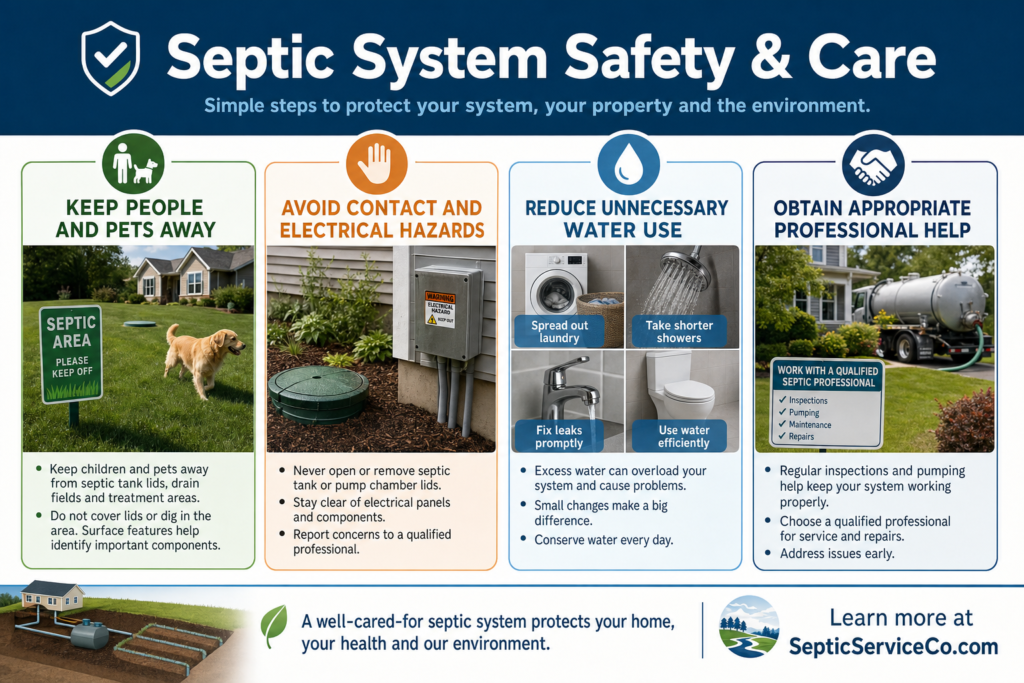
IMAGE PLACEHOLDER Filename: septicserviceco-septic-problems-repair-guide-backup-safety.png Alt: Indoor sewage backup safety Image idea: Safety infographic showing keep people and pets away, avoid contact and electrical hazards, reduce unnecessary water use and obtain appropriate professional help.Septic Drain Field Warning Signs
These symptoms may indicate a drain-field or other septic-system problem, but they do not establish the cause by themselves. A qualified evaluation is needed to distinguish temporary conditions, tank/service needs, drainage problems and component or soil-treatment-area issues.
See Septic Drain Field Warning Signs for a fuller breakdown, and the Septic Drain Field Guide for how drain field health is assessed more broadly.
IMAGE PLACEHOLDER: Yard-level illustration showing standing water and lush grass patches over a failing drain field versus normal grass elsewhereWhy a Septic System Might Smell
Where an odor is noticed can be useful information to report to a service provider, but odor location alone does not identify the cause. Plumbing, venting, tank, soil-treatment-area and other conditions can produce overlapping symptoms.
See Why Does My Septic System Smell? for how to narrow this down by location.
Why Drains Might Be Slow
A single slow fixture and multiple slow fixtures can have different possible causes. Multiple affected fixtures can raise concern about a main drainage or septic-related problem, but neither pattern establishes the cause without evaluation.
See Why Are My Drains Slow With a Septic System? for that distinction in more detail.
Repair vs. Replacement
These symptoms may indicate a drain-field or other septic-system problem, but they do not establish the cause by themselves. A qualified evaluation is needed to distinguish temporary conditions, tank/service needs, drainage problems and component or soil-treatment-area issues.
See Septic Tank Repair vs Replacement for how this decision is generally evaluated.
A Safety Note
Diagnosing or addressing a septic problem should never involve entering the tank or a chamber, or attempting to remove or handle tank lids yourself, since these can involve hazardous gases and unsafe conditions even for a brief period. If your system has a high-water alarm and it activates, treat it as a sign of an abnormal condition worth investigating promptly, not as confirmation that an overflow has already happened; a professional can determine what’s actually occurring.
Urgent Situations
Active sewage backups, standing effluent in the yard, or an activated high-water alarm generally call for prompt attention rather than waiting for a routine appointment, since these situations can affect health and property the longer they continue.
Next Steps
If the symptom you’re seeing matches one of the patterns above, the linked articles go into more detail on likely causes. Because similar symptoms can have different underlying causes, having a professional inspect the system in person remains the most reliable way to confirm what’s actually happening and what repair, if any, is needed.
Indoor Sewage Backup Safety
If sewage is backing up indoors, avoid direct contact and keep children and pets away from affected areas. Reduce unnecessary water use and avoid electrical hazards in wet areas. Depending on the extent of contamination, professional septic/plumbing evaluation and appropriate cleanup may be needed, including attention to affected porous materials or HVAC components.
Service note: Septic Service Co provides informational/referral content. System design, terminology, inspection scope, pumping needs, repair options, provider services and regulatory requirements vary by property and jurisdiction. Use qualified septic professionals and confirm applicable requirements for the specific system and project.
Need Septic Service Help?
Call to discuss your situation and confirm service options, pricing, scheduling, availability, and provider capabilities directly.
Referral Disclosure: Septic Service Co. is a referral-style informational website. We may help callers connect with independent service providers. We do not perform septic services ourselves. Pricing, availability, response times, warranties, provider capabilities, and service options may vary. Always confirm details directly before scheduling work.