
SEPTIC SYSTEM RESOURCE
What Causes Septic Backups
Practical information from Septic Service Co to help you understand septic service options, warning signs, maintenance considerations, and what to confirm with an independent provider.
Excessive sludge and scum accumulation can interfere with normal tank performance and increase the risk of solids moving toward the outlet. Backups may also involve an inlet or outlet restriction, effluent filter where one is used, piping problem, pump failure in systems that use pumps, unusually high wastewater loading, or a downstream treatment/dispersal problem. Pumping may be part of the solution when solids accumulation is excessive, but a backup does not automatically mean the tank simply became “full.”
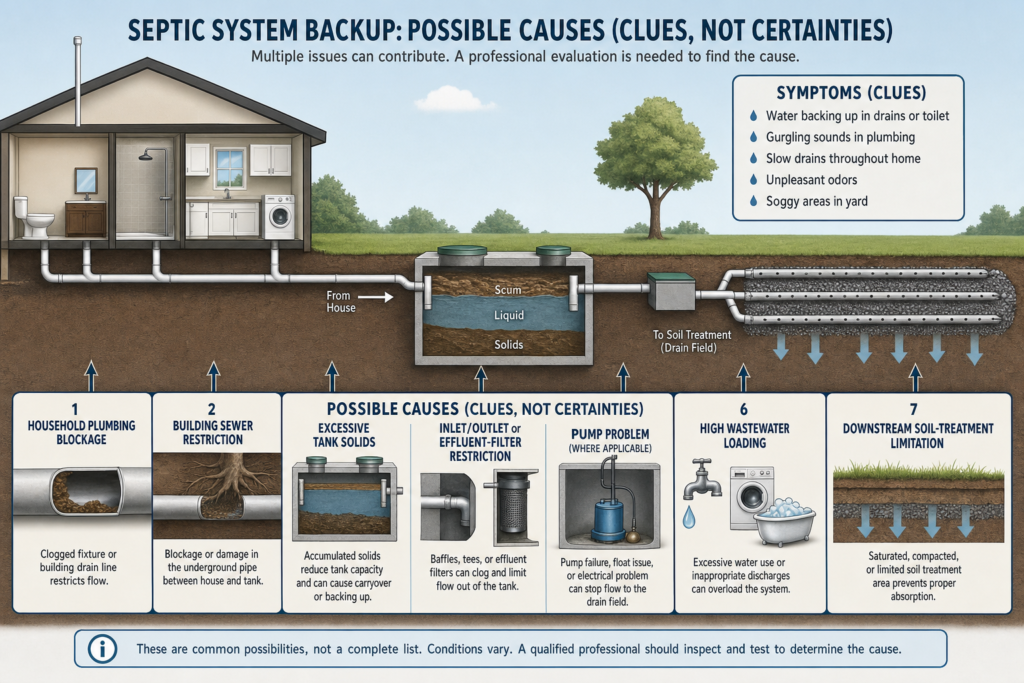
Excessive Solids or a Tank/Outlet Restriction
If a tank hasn’t been pumped in a long time, sludge and scum can build up to the point where there’s little room left for incoming wastewater, causing it to back up rather than flow through normally. This is one of the more straightforward causes to resolve, typically with pumping rather than repair.
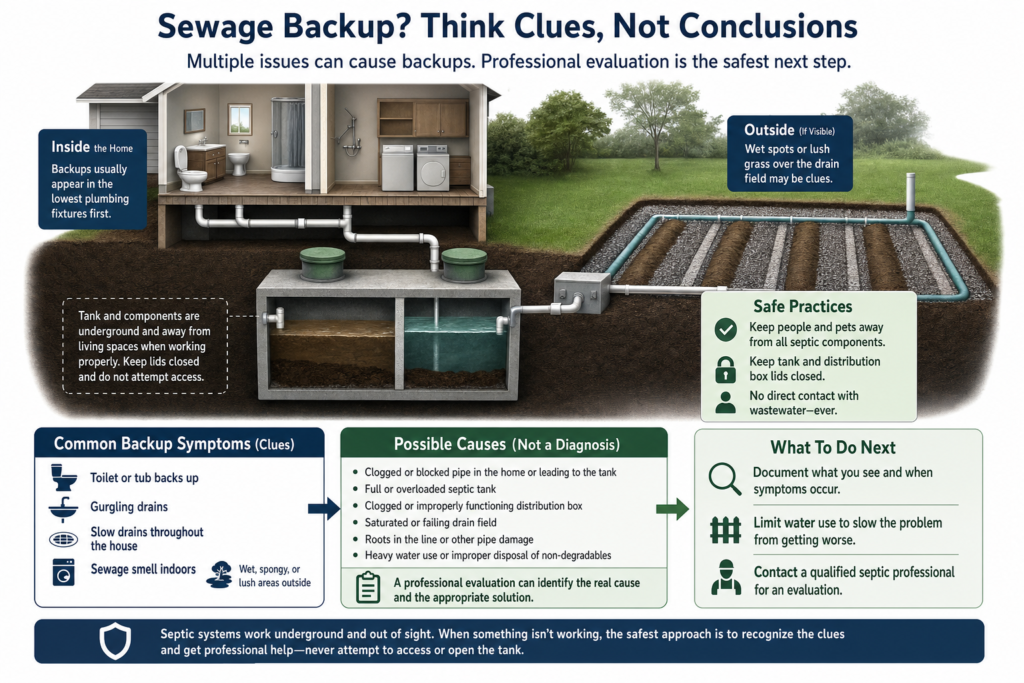
A Blocked Main Line
The pipe connecting the house to the septic tank can become blocked by grease buildup, flushed items that shouldn’t go down the drain (such as wipes, feminine hygiene products, or paper towels), or a collapsed or crushed section of pipe. A blockage here can cause backups even in a tank that isn’t full, since the wastewater never reaches the tank in the first place.
Root Intrusion
Roots can enter damaged pipe joints, cracks or other openings where moisture is available and may restrict wastewater flow. The appropriate response depends on the location and condition of the affected piping.
A Failing Drain Field
If the drain field can no longer absorb effluent—due to saturation, age, or damage—the tank has nowhere to send treated wastewater, which causes it to back up toward the house instead. Drain field failure tends to produce more persistent and severe backups than a simple full tank or line blockage. See Septic Drain Field Warning Signs for how to recognize this specifically.
Structural Damage to the Tank or Pipes
A cracked tank, a damaged baffle, or a broken pipe can disrupt the normal flow of wastewater through the system, sometimes causing backups even when the tank isn’t full and the drain field is otherwise functional.
Determining the Cause
Because several of these causes produce similar symptoms, a professional inspection is generally needed to pinpoint the actual source rather than assuming it’s the most common explanation. If backups are recurring or don’t resolve after pumping, see Signs of Septic System Failure for broader indicators the system needs more than routine service, and Septic Tank Repair vs Replacement if a structural issue is suspected.
For a broader overview of septic repair topics, see the Septic Repair Guide.
Safety note: Keep people and pets away from sewage backups or surfacing septic effluent. Avoid direct contact with wastewater and never enter a septic tank.
Need Septic Service Help?
Call to discuss your situation and confirm service options, pricing, scheduling, availability, and provider requirements directly.
Referral Disclosure: Septic Service Co is a referral-style informational website. We may help callers connect with independent service providers. We do not perform septic services ourselves. Pricing, availability, response times, warranties, provider capabilities, and service options may vary. Always confirm details directly before scheduling work.