
SEPTIC SYSTEM RESOURCE
Why Does My Septic System Smell
Practical information from Septic Service Co to help you understand septic service options, warning signs, maintenance considerations, and what to confirm with an independent provider.
Odors over the soil treatment area can indicate surfacing or poorly dispersed effluent and deserve evaluation, particularly when accompanied by persistent wet areas or visible wastewater. Groundwater, drainage conditions and other site factors can also affect what is observed at the surface.
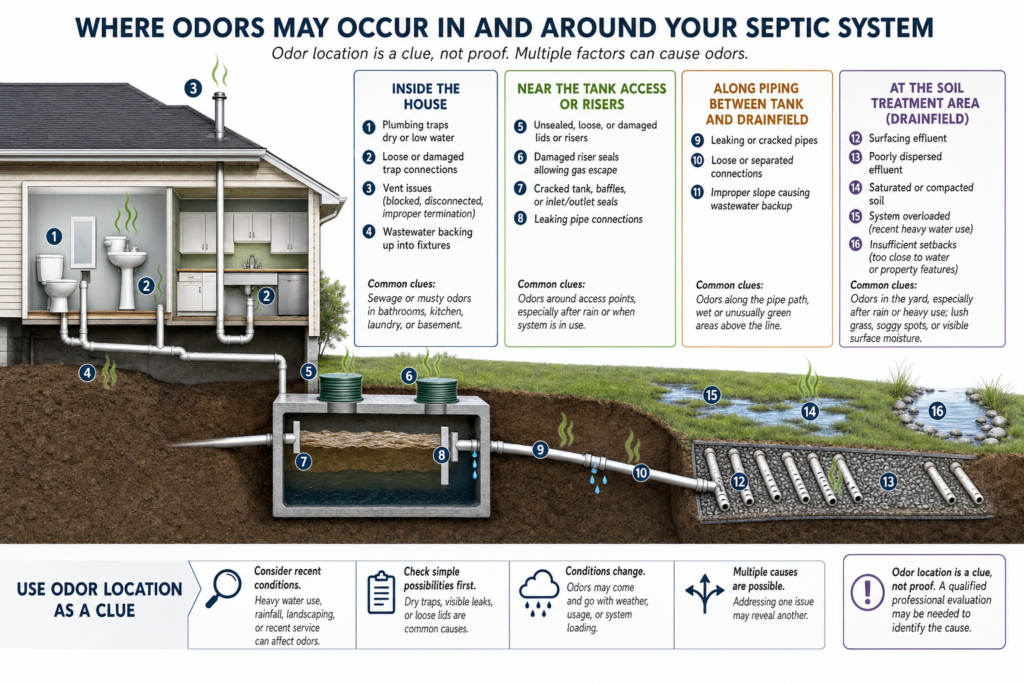
Odor Inside the House
Indoor sewage odors are often a plumbing issue rather than a septic system problem. Common causes include:
- A dry P-trap under a rarely used sink, tub, or floor drain, which normally holds water to block sewer gas from entering the room; if the water evaporates, gas can escape freely.
- A blocked plumbing vent on the roof, which disrupts normal airflow in the drain system and can push sewer gas back into the house instead of venting it outside.
- A worn wax ring or seal around a toilet base, which allows sewer gas to escape around the toilet rather than through it.
These causes are typically plumbing repairs rather than septic system issues, though a severely overfull tank can occasionally contribute to indoor odor as well.
Odor Near the Tank
A sewage smell concentrated specifically around the tank’s location often means the tank is due for pumping, or that its lid or riser isn’t sealing properly and is letting gas escape. A cracked lid, a missing seal, or a riser that wasn’t installed correctly can all allow odor to escape even when the tank itself is otherwise functioning normally.
Odor Near the Drain Field
An odor concentrated over the drain field, especially alongside standing water or unusually lush grass in that specific area, points to the field struggling to absorb effluent rather than a tank or plumbing issue. This is a more serious sign than tank-related odor and is covered in more detail in Septic Drain Field Warning Signs.
Narrowing Down the Source
- Note whether the smell is strongest indoors, near the tank, or out where the drain field is located.
- If indoors, check for a rarely used fixture with a dry trap, or consider whether a roof vent might be blocked.
- If near the tank, check whether the tank is due for pumping and inspect the lid or riser seal for damage.
- If near the drain field, look for other drain field warning signs alongside the odor.
When It Points to a Bigger Problem
Odor alone, especially indoors, is often a simple plumbing fix. Odor combined with slow drains, backups, or standing water suggests something more significant with the tank or drain field; see Signs of Septic System Failure for the broader pattern of symptoms worth watching for together.
For a broader overview of septic repair topics, see the Septic Repair Guide.
Do Not Open a Tank to Investigate an Odor
Do not open a septic tank, lean over an opening or enter a tank to identify an odor. Septic tanks are confined spaces that can contain dangerous gases. For strong or persistent unexplained indoor sewer-gas odors, ventilate the area as appropriate and arrange professional evaluation, especially if the odor is severe or anyone develops symptoms.
Need Septic Service Help?
Call to discuss your situation and confirm service options, pricing, scheduling, availability, and provider requirements directly.
Referral Disclosure: Septic Service Co is a referral-style informational website. We may help callers connect with independent service providers. We do not perform septic services ourselves. Pricing, availability, response times, warranties, provider capabilities, and service options may vary. Always confirm details directly before scheduling work.