
SEPTIC SYSTEM RESOURCE
Why Are My Drains Slow With a Septic System
Practical information from Septic Service Co to help you understand septic service options, warning signs, maintenance considerations, and what to confirm with an independent provider.
One slow fixture often points first to a localized plumbing issue, while several slow fixtures can indicate a restriction or flow problem farther downstream. In a home with a septic system, possible causes include the building sewer, tank inlet or outlet, effluent filter where one is used, excessive solids accumulation, pump components in systems that use them, hydraulic loading, or a downstream soil-treatment problem. Slow drains alone do not prove that the septic tank needs pumping.
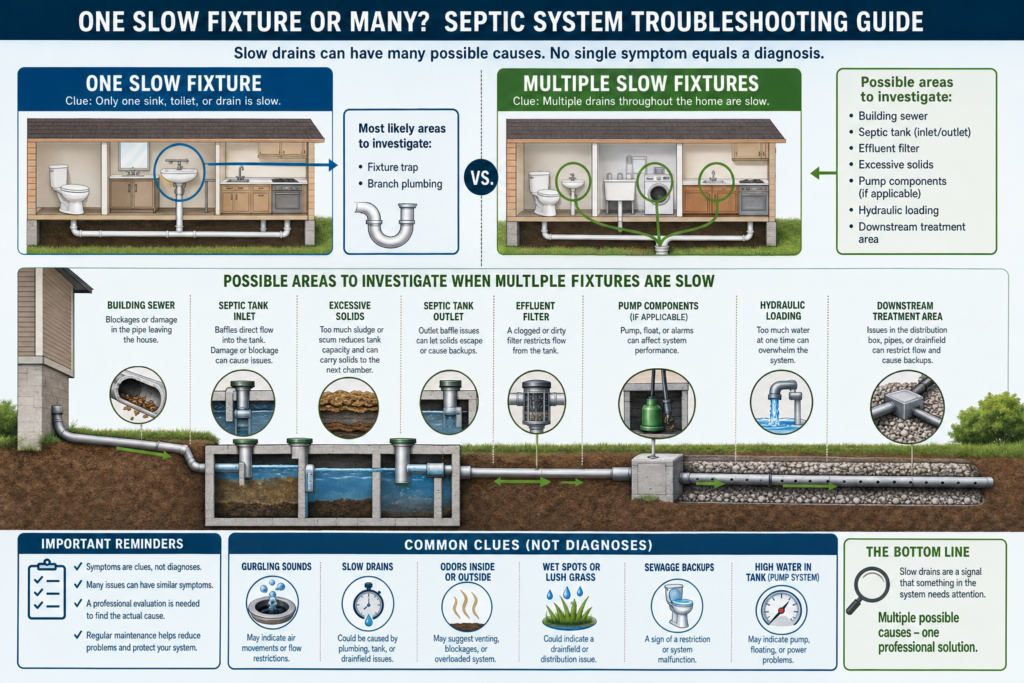
One Slow Drain vs. Multiple Slow Drains
If only a single sink, tub, or drain is slow, the cause is more likely a localized clog in that fixture’s own plumbing—hair, soap buildup, or a small object—unrelated to the septic system itself. If several drains across the house are slow at the same time, the cause is more likely somewhere shared by all of them: the main line, the tank, or the drain field.
Excessive Solids or Restricted Septic Flow
A functioning septic tank normally contains wastewater near its operating level. The concern is not that incoming liquid gradually fills an empty tank; it is that excessive sludge or scum, a restriction at the inlet/outlet or filter, a pump problem where applicable, or limited downstream flow can interfere with normal wastewater movement. Pumping helps when accumulated solids are the relevant issue, but it does not correct every cause of slow drains.
A Partially Blocked Main Line
Grease buildup, root intrusion, or a partial obstruction in the pipe between the house and the tank can restrict flow even when the tank itself isn’t full, since wastewater has trouble reaching the tank at all.
A Struggling or Failing Drain Field
If the drain field can’t absorb effluent quickly enough, the tank fills up because it has nowhere to send treated wastewater, which backs the slowdown up through the whole system, including drains inside the house. This is a more serious cause than a simple full tank, since pumping won’t resolve it on its own. See Septic Drain Field Warning Signs for other signs that point specifically to the drain field.
When Slow Drains Signal Something More Serious
Slow drains that improve after pumping and then gradually return over the following weeks or months are consistent with routine tank filling and are usually not cause for concern beyond normal service. Slow drains that don’t improve after pumping, or that quickly return, suggest a blockage or drain field issue that pumping alone won’t fix. See What Causes Septic Backups? if slow drains are progressing toward an actual backup, and Signs of Septic System Failure for the broader pattern of symptoms that point to a failing system.
For a broader overview of septic repair topics, see the Septic Repair Guide.
Need Septic Service Help?
Call to discuss your situation and confirm service options, pricing, scheduling, availability, and provider requirements directly.
Referral Disclosure: Septic Service Co is a referral-style informational website. We may help callers connect with independent service providers. We do not perform septic services ourselves. Pricing, availability, response times, warranties, provider capabilities, and service options may vary. Always confirm details directly before scheduling work.