SEPTIC FAQ RESOURCES
Septic System FAQs
Find answers to common questions about septic pumping, cleaning, maintenance, inspections, problems, repairs, drain fields, installation, replacement, alarms, and homeowner planning.
- Pumping, cleaning, and maintenance questions
- Septic problems, repairs, and drain field topics
- Inspection, installation, and replacement planning
- Alarm, pump-system, and homeowner questions

Browse FAQ Topics
Use this hub to find the question category closest to your situation. For broader answers across the subject, start with Septic System FAQ.
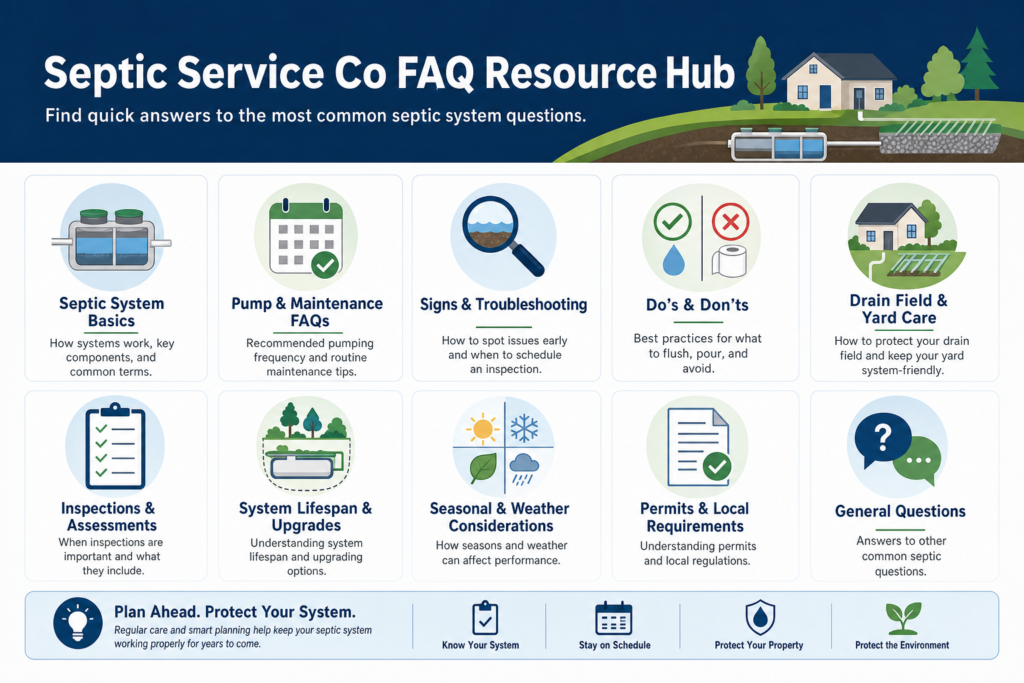
Septic Pumping & Cleaning FAQs
Questions about pumping intervals, sludge and scum removal, service scope, access, and preparing for service.
Septic Problems & Repair FAQs
Questions about warning signs, backups, odors, slow drains, alarms, possible causes, and service evaluation.
Drain Field FAQs
Questions about drain field function, warning signs, protection, evaluation, and replacement considerations.
Septic Inspection & Maintenance FAQs
Questions about routine maintenance, inspections, records, household use, and long-term system care.
Septic Installation & Replacement FAQs
Questions about new systems, replacement planning, site evaluation, permits, components, and provider scope.
Septic Alarm & Pump System FAQs
Questions about high-water alarms, pump chambers, abnormal conditions, water-use reduction, and when to seek service.
Start With the Main FAQ
The Septic System FAQ is the broad FAQ pillar for this site. It covers common questions across the topic without requiring you to choose a narrow category first. The focused FAQ pages above are intended for deeper question sets about a specific service, project, or planning issue.
Quick Answers
Does a septic tank need pumping only when it is full?
No. A functioning tank normally contains wastewater near its operating level. Pumping is generally used to remove accumulated sludge and scum before those solids create problems.
Can septic symptoms identify the exact problem?
Not reliably. Backups, odors, slow drains, wet areas, or alarms can have multiple causes. A qualified evaluation may be needed to determine what is happening.
Is it safe to enter or reach into a septic tank or chamber?
No. Septic tanks and chambers can contain dangerous gases and other hazards. Do not enter them or reach into equipment areas; use a qualified provider for service and evaluation.
Use FAQs for Planning, Not as a Substitute for Evaluation
FAQ content can help you understand terminology, compare options, prepare for a service or rental request, and identify useful questions to ask. Property conditions, equipment, local requirements, provider capabilities, availability, and service or rental terms can vary. Confirm project-specific details with the appropriate provider before making a decision.
For broader planning information, visit Complete Guide to Septic Systems. You can also review Septic Problems & Repair Guide and Ohio Homeowner Septic Guide.
Still Have a Service Question?
Call to discuss your situation and confirm current provider availability, service or rental options, project requirements, and other details that may apply.
Referral Disclosure: Septic Service Co is an informational/referral website. We may help callers connect with independent septic service providers. We do not pump, inspect, repair, install, or replace septic systems ourselves. Pricing, availability, service areas, provider capabilities, project requirements, warranties, and terms may vary. Confirm details directly before scheduling.