
SEPTIC SYSTEM RESOURCE
Septic Drain Field Warning Signs
Practical information from Septic Service Co to help you understand septic service options, warning signs, maintenance considerations, and what to confirm with an independent provider.
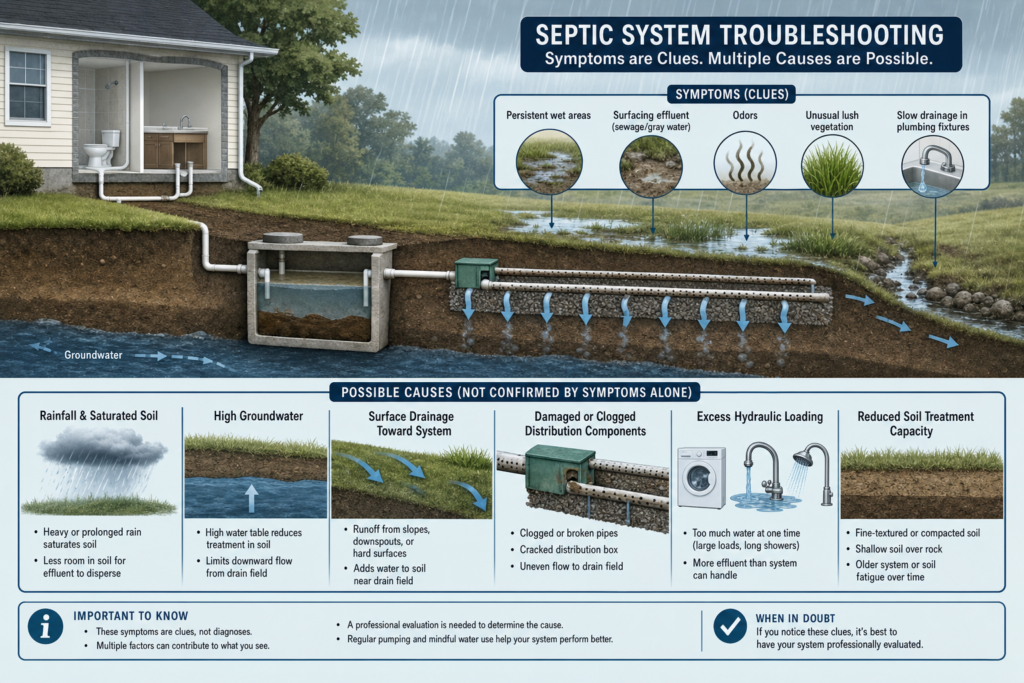
Persistent wet or soggy ground, surfacing wastewater, odors, unusual vegetation patterns and recurring drainage problems can be warning signs near a septic soil treatment area, but they do not by themselves prove that the drain field has failed. Rainfall, groundwater, surface drainage, damaged piping or distribution components, excessive hydraulic loading and reduced soil-treatment capacity are among the conditions that may need evaluation.
Standing Water or Soggy Ground Over the Field
Water pooling on the surface above the drain field, especially during dry weather when there’s no other obvious explanation like recent rain, usually means effluent is surfacing because the soil beneath can no longer absorb it at the rate the system is producing it.
Unusually Lush or Green Grass Over the Field
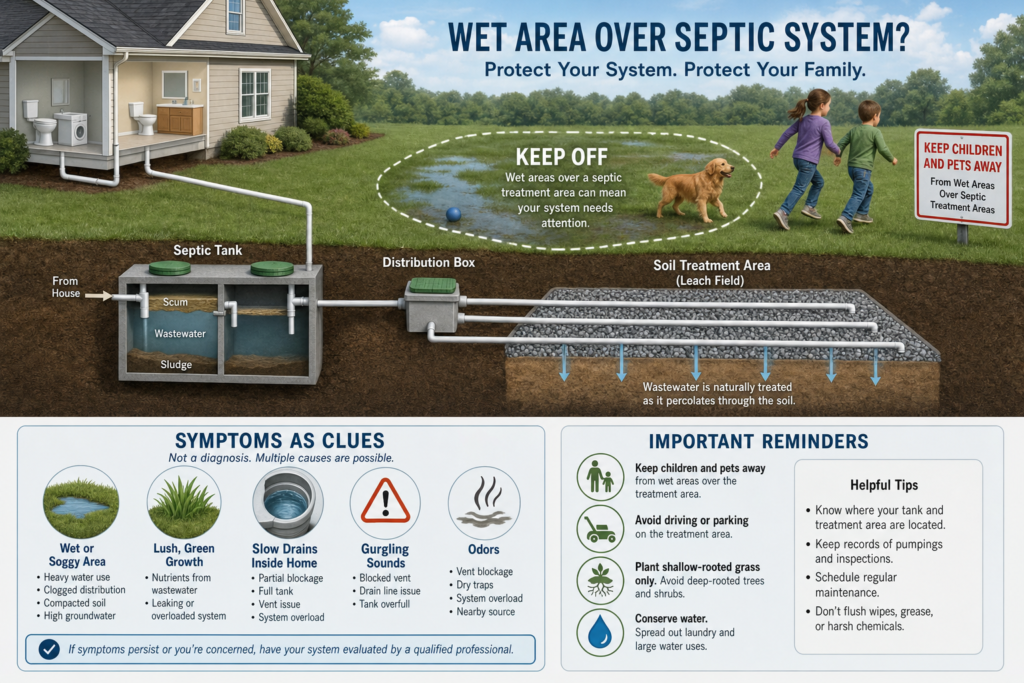
Grass or vegetation that appears unusually green or vigorous over part of the treatment area can be a clue that moisture or nutrients differ from surrounding soil, but vegetation differences alone do not establish septic failure. Consider the pattern together with wet soil, odors, surfacing wastewater and other system symptoms.
Sewage Odor Near the Field
An odor concentrated specifically over the drain field area, rather than near the tank or inside the house, points to effluent reaching or nearing the surface in that location.
Slow Drains or Backups That Persist After Pumping
If pumping the tank doesn’t resolve slow drains or backups, or they return quickly afterward, the problem is likely downstream of the tank rather than caused by tank capacity. A drain field that can no longer accept effluent has nowhere to send it, which pushes the problem back toward the tank and eventually the house.
What Typically Causes Drain Field Failure
- Soil saturation from consistently high water tables, poor natural drainage, or an overloaded system sending more effluent than the field can handle.
- Age, since drain fields have a functional lifespan and soil pores can gradually clog with biomat (a layer of organic material) over years of use.
- Root intrusion into the field’s pipes, disrupting even distribution of effluent.
- Physical damage from vehicles, heavy equipment, or construction driving or parking over the field, which can compact the soil and reduce its ability to absorb effluent.
What to Do If You See These Signs
Drain field problems are generally more involved than routine tank service and may range from reducing water usage to give the field time to recover, to partial or full field replacement in more severe cases. See Septic Tank Repair vs Replacement for how these decisions are generally evaluated, and Signs of Septic System Failure for how drain field issues fit into broader system failure.
For a broader overview of septic repair topics, see the Septic Repair Guide.
Safety Around Wet or Contaminated Areas
Keep people and pets away from suspected sewage or surfacing septic effluent. Do not touch or walk through it, and never enter a septic tank. Arrange evaluation to determine whether the source is septic wastewater, groundwater, surface drainage or another condition.
Need Septic Service Help?
Call to discuss your situation and confirm service options, pricing, scheduling, availability, and provider requirements directly.
Referral Disclosure: Septic Service Co is a referral-style informational website. We may help callers connect with independent service providers. We do not perform septic services ourselves. Pricing, availability, response times, warranties, provider capabilities, and service options may vary. Always confirm details directly before scheduling work.