SEPTIC MAINTENANCE RESOURCE
Septic Inspection & Maintenance Guide
Septic inspection evaluates the condition of the tank, baffles, and drain field, while ongoing maintenance covers the everyday habits and periodic checks that help a system perform reliably over time. This guide covers what an inspection involves, when to schedule one, how inspection compares to pumping, common inspection findings, and general maintenance practices, with links to detailed articles on each.
- Understand common septic system service and maintenance considerations
- Explore problems, inspections, pumping, drain fields, installation, and replacement
- Use detailed supporting articles for specific questions
- Confirm pricing and availability directly with the provider
What Happens During an Inspection
Inspection scope varies by inspection type, system, provider and applicable requirements. Depending on the situation, an inspection may include locating accessible components, reviewing tank or component condition, checking sludge/scum accumulation, observing wastewater flow or distribution, reviewing alarms or pumps, and evaluating other accessible system features.
See What Happens During a Septic Inspection? for the full step-by-step process.
IMAGE PLACEHOLDER Filename: septicserviceco-septic-inspection-maintenance-guide-scope.png Alt: Septic inspection scope can vary Image idea: Infographic comparing routine maintenance review, real-estate inspection and more comprehensive evaluation with provider/system variation.When to Schedule an Inspection
Inspections are commonly scheduled alongside routine pumping, before buying or selling a property with a septic system, after noticing warning signs, following a significant change in household water use, or after a system has sat unused for an extended period. Each of these situations calls for inspection for a different reason, so the right timing depends on which applies to your circumstances.
See When Should a Septic System Be Inspected? for more on these triggers.
IMAGE PLACEHOLDER Filename: septicserviceco-septic-inspection-maintenance-guide-pumping-inspection.png Alt: Septic pumping and inspection are different services Image idea: Comparison infographic explaining pumping removes accumulated contents while inspection evaluates system condition/scope as provided.Inspection Before Buying a Property
A septic inspection is a standard part of due diligence when purchasing a property with a septic system, generally more thorough than a routine check since the buyer typically has no history with the system and needs a complete picture before finalizing the purchase.
See Septic Inspection Before Buying a House for what this process typically involves.
IMAGE PLACEHOLDER Filename: septicserviceco-septic-inspection-maintenance-guide-alarm.png Alt: Septic high-water alarm response Image idea: Safety infographic showing minimize unnecessary water use, follow system guidance, avoid pump chamber contact and request qualified evaluation.Inspection vs. Pumping
An inspection evaluates the system’s condition and doesn’t necessarily involve removing the tank’s contents, while pumping is a maintenance action that empties accumulated solids from the tank. The two are often performed together during the same visit, since having the tank open for pumping also makes it easier to inspect, but they serve different purposes and one doesn’t automatically include the other.
See Septic Tank Inspection vs Pumping for that distinction in more detail.
IMAGE PLACEHOLDER: Split graphic showing an inspection checklist on one side and a pumping truck on the other, with an overlapping “often done together” noteCommon Inspection Findings
Inspections frequently reveal a tank that’s overdue for pumping, a damaged or missing baffle, cracks or structural issues in the tank, root intrusion into pipes, or signs of a struggling drain field. What follow-up is needed depends entirely on the specific finding, ranging from routine pumping to a more involved repair.
See Common Septic Inspection Problems for what each of these findings generally means.
Ongoing Maintenance Practices
Beyond periodic inspection and pumping, day-to-day habits affect how well a system performs over time: being mindful of water usage, avoiding flushing anything beyond human waste and toilet paper, keeping vehicles and heavy equipment off the drain field, and avoiding septic additives marketed as reducing the need for pumping, since these aren’t a substitute for periodic sludge and scum removal. Keeping records of past inspections, pumping dates, and any repairs also makes it easier to establish a reliable service interval and is useful information if you ever sell the property.
A Safety Note
Homeowners should never enter a septic tank or chamber and should avoid removing or handling heavy, damaged or unsafe access lids. Tank and chamber access should be performed by someone equipped and qualified to do so safely.
Next Steps
If you’re due for routine service or want to understand your system’s current condition, the linked articles above cover the specific inspection and maintenance questions in more detail. For a property you’re buying or one showing warning signs, an in-person inspection remains the most reliable way to understand its actual condition rather than relying on assumptions.
What to Do if a High-Water Alarm Activates
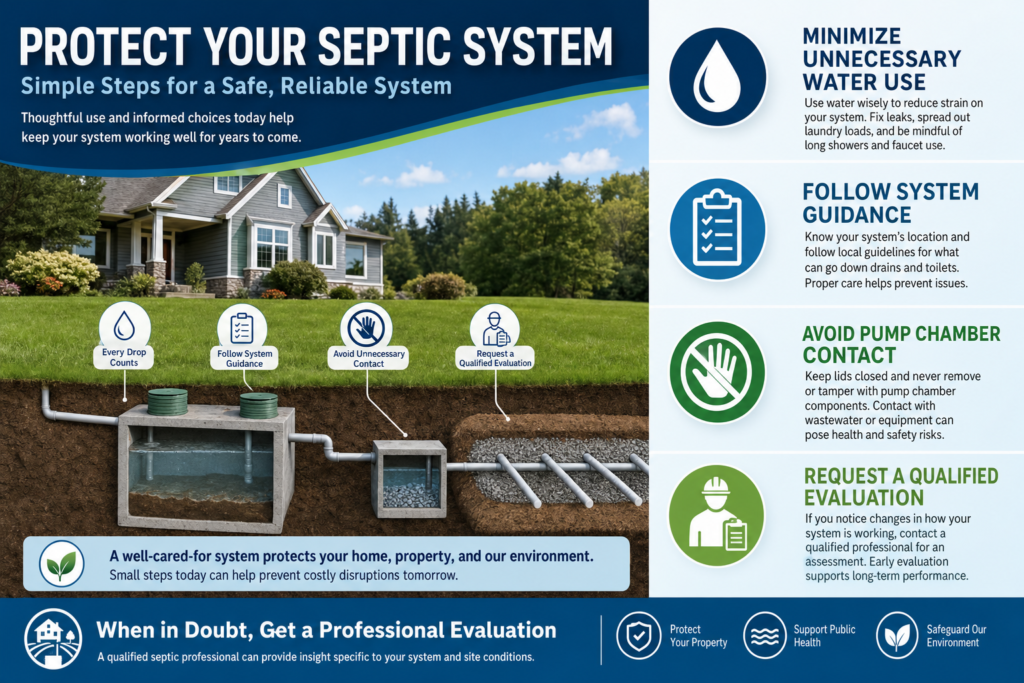
A high-water alarm indicates an abnormal condition but does not by itself prove that sewage has overflowed. Minimize unnecessary water use, follow the system or manufacturer instructions, and arrange qualified evaluation. Do not reach into a pump chamber, handle energized components, or repeatedly reset or silence an alarm without determining why it activated.
Service note: Septic Service Co provides informational/referral content. System design, terminology, inspection scope, pumping needs, repair options, provider services and regulatory requirements vary by property and jurisdiction. Use qualified septic professionals and confirm applicable requirements for the specific system and project.
Need Septic Service Help?
Call to discuss your situation and confirm service options, pricing, scheduling, availability, and provider capabilities directly.
Referral Disclosure: Septic Service Co. is a referral-style informational website. We may help callers connect with independent service providers. We do not perform septic services ourselves. Pricing, availability, response times, warranties, provider capabilities, and service options may vary. Always confirm details directly before scheduling work.