
SEPTIC SYSTEM RESOURCE
Common Septic Inspection Problems
Practical information from Septic Service Co to help you understand septic service options, warning signs, maintenance considerations, and what to confirm with an independent provider.
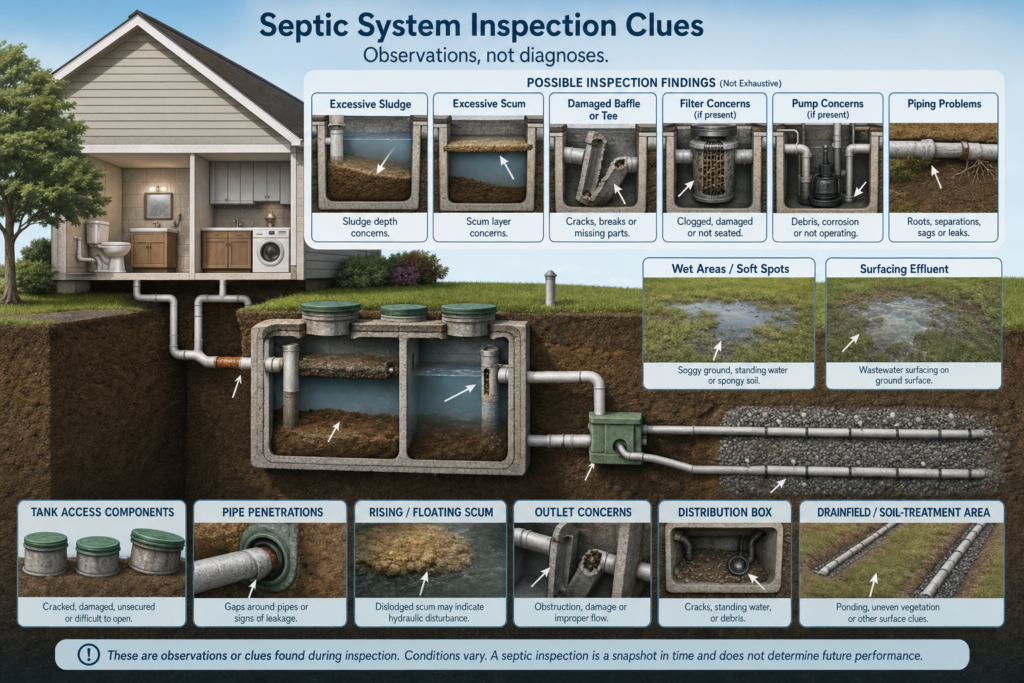
The problems that turn up most often during a septic inspection include a tank that’s overdue for pumping, damaged or missing baffles, cracks or structural damage to the tank, root intrusion into pipes, and signs the drain field is struggling to absorb effluent. Knowing what these findings generally mean helps you understand an inspection report and what kind of follow-up, if any, to expect.
A Tank Overdue for Pumping
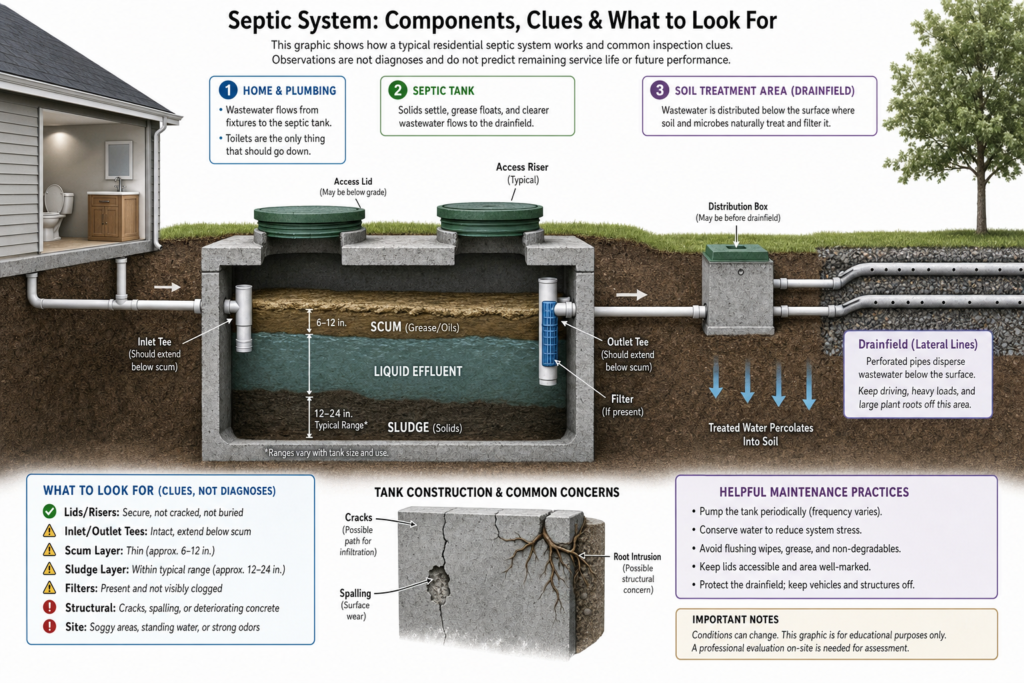
Excessive sludge and scum accumulation is a common maintenance finding during septic service and inspection. The significance depends on measured accumulation, tank configuration, maintenance history and whether solids are approaching areas where they could interfere with normal treatment or move toward the outlet.
Damaged or Missing Baffles
Damaged inlet or outlet baffles or tees can disrupt intended flow and increase the risk of solids moving farther into the system, which may contribute to downstream problems. Accessible components can be evaluated for visible deterioration or damage.
Cracks or Structural Damage to the Tank
Cracks can allow wastewater to leak out before it’s properly treated, or in some cases let groundwater seep in and add unnecessary volume to the tank. The significance of a crack depends on its size and location, and whether the tank’s overall structure is still sound; see Septic Tank Repair vs Replacement for how inspectors and professionals typically evaluate this.
Root Intrusion
Roots growing into pipes or, less commonly, into the tank itself can restrict flow and eventually cause blockages. This is more common in older systems or those located near mature trees, and is often addressed by clearing the roots and, if needed, repairing the affected section of pipe.
Drain Field Problems
Standing water, unusually lush vegetation, or effluent odors over the drain field during an inspection point to a field that’s struggling to absorb wastewater. This is typically one of the more significant findings in an inspection, since it can be more costly to address than tank-related issues. See Septic Drain Field Warning Signs for how these are identified in more detail.
An Undersized System for the Household
Records or observed system information may raise questions about whether the installed system matches the property’s approved design or current use. Septic design capacity is generally tied to approved design criteria and local requirements rather than simply the number of people currently occupying the home.
What Happens After a Problem Is Found
Depending on the finding, follow-up can range from routine pumping to targeted repairs to a more involved evaluation of the drain field. See What Causes Septic Backups? and Signs of Septic System Failure for how some of these inspection findings relate to symptoms you might notice at home.
For a broader overview of septic inspections, see the Septic System Inspection Guide.
Need Septic Service Help?
Call to discuss your situation and confirm service options, pricing, scheduling, availability, and provider requirements directly.
Referral Disclosure: Septic Service Co is a referral-style informational website. We may help callers connect with independent service providers. We do not perform septic services ourselves. Pricing, availability, response times, warranties, provider capabilities, and service options may vary. Always confirm details directly before scheduling work.