COMPLETE SEPTIC SYSTEM GUIDE
Complete Guide to Septic Systems
A septic system treats household wastewater on-site using a buried tank and a drain field, rather than sending it to a municipal sewer. This guide covers how the system works, the range of services it needs over time, common problems and warning signs, the drain field's role, installation and replacement, and ongoing inspection and maintenance. Each section links to a more detailed article if you want to go deeper on a specific topic.
- Understand common septic system service and maintenance considerations
- Explore problems, inspections, pumping, drain fields, installation, and replacement
- Use detailed supporting articles for specific questions
- Confirm pricing and availability directly with the provider
How a Septic System Works
Effluent leaves the tank and moves into the system’s soil treatment or dispersal area. The exact design varies by system and property. Suitable soil provides additional treatment as wastewater moves through the treatment area; system design, soil conditions and applicable requirements affect how this occurs.
See How Does a Septic System Work? for the full breakdown of components and the treatment process.
IMAGE PLACEHOLDER Filename: septicserviceco-complete-guide-to-septic-systems-cutaway.png Alt: How a septic system works Image idea: Clean cutaway infographic showing house wastewater line, septic tank, operating liquid level, sludge/scum layers, outlet and soil treatment/dispersal area.Septic Tank Pumping and Cleaning
Because sludge and scum build up gradually rather than breaking down completely on their own, a tank needs periodic pumping to remove accumulated solids before they reach a level that could flow into the drain field. How often this is needed depends on tank size, household size, and water usage rather than a single interval that applies to every home; a range like every three to five years is sometimes used as general planning context, but the right interval for your specific tank is better confirmed by measuring actual sludge and scum levels than by following a fixed number of years. Cleaning is a related but more thorough service, addressing buildup on tank surfaces beyond what routine pumping removes.
See the Septic Tank Pumping & Cleaning Guide for pumping frequency, what a pumping visit involves, and how cleaning differs from pumping.
IMAGE PLACEHOLDER Filename: septicserviceco-complete-guide-to-septic-systems-tank-layers.png Alt: Septic tank sludge scum and wastewater layers Image idea: Educational tank cross-section showing normal wastewater operating level with sludge and scum accumulation; no person entering tank.Septic Problems and Warning Signs
Slow drains, gurgling pipes, sewage odors, and backups are signs something in the system may need attention, though these symptoms are clues that help describe a problem rather than a way to diagnose the exact cause yourself. Similar symptoms can point to a full tank, a blocked line, or a struggling drain field, and telling these apart generally requires an in-person inspection rather than guesswork based on symptoms alone.
See the Septic Problems & Repair Guide for common causes of backups, warning signs of a failing system, and how repair and replacement decisions are typically made.
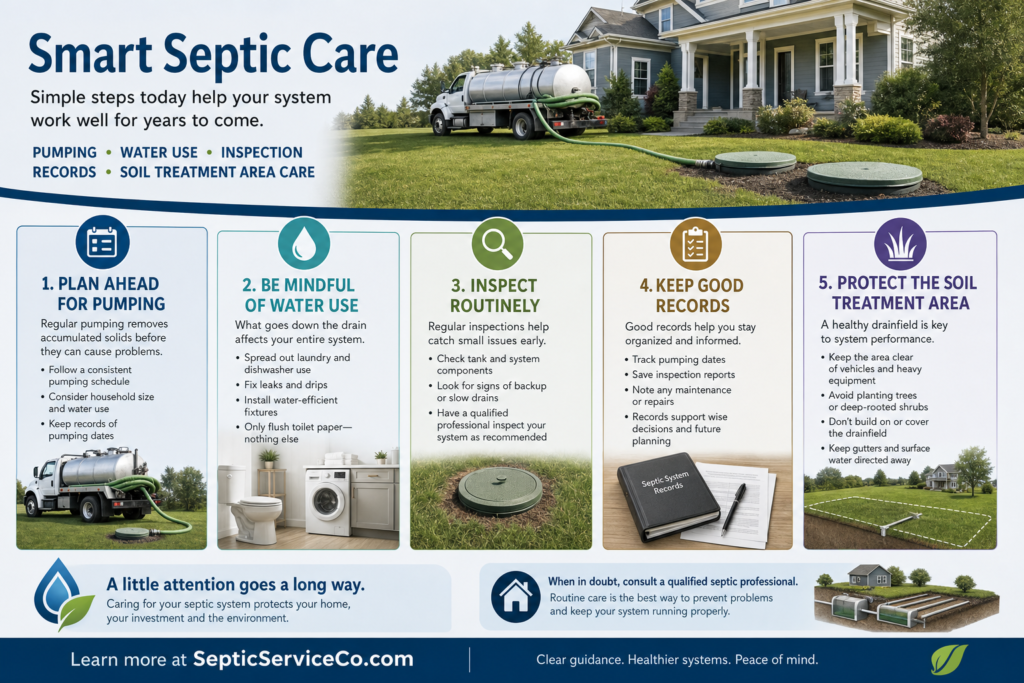
IMAGE PLACEHOLDER Filename: septicserviceco-complete-guide-to-septic-systems-maintenance.png Alt: Septic system maintenance overview Image idea: Infographic showing pumping planning, water-use awareness, inspection, records and protecting the soil treatment area.The Drain Field’s Role
The drain field is where effluent finishes being treated as it filters through the soil, and its condition depends on that soil having enough remaining capacity to absorb liquid without becoming saturated. A struggling or failing drain field is generally a more involved problem than a tank simply needing pumping, since it involves the underground distribution system rather than just the tank itself.
See the Septic Drain Field Guide for warning signs and what affects drain field health.
IMAGE PLACEHOLDER: Cross-section of a drain field trench showing perforated pipe, gravel, and surrounding soilInstallation and Replacement
Installing a new septic system involves site evaluation, sizing the tank and drain field to the property and household, and following local health department requirements throughout the process. Replacement of an existing system, or of a failed component like the drain field, follows a similar process but is informed by why the original system needs to be replaced in the first place.
See the Septic Installation & Replacement Guide for what these processes generally involve.
Inspection and Maintenance
Regular inspection checks the tank’s condition, sludge and scum levels, and drain field performance, while maintenance covers the ongoing habits—mindful water use, avoiding harmful additives, and keeping records of service history—that help a system perform reliably over time. Inspections are also a standard part of buying or selling a property with a septic system.
See the Septic Inspection & Maintenance Guide for what an inspection covers and ongoing maintenance practices.
A Safety Note on Septic Tanks
Septic tanks can contain hazardous gases and unsafe conditions, and entering a tank or chamber is dangerous even briefly. Lids should only be opened or handled by someone experienced in doing so safely, and homeowners should avoid removing or entering tank access points themselves. This is one of several reasons septic service is generally best left to a qualified professional rather than handled as a DIY project.
Ohio Homeowners
Septic system requirements in Ohio are set at the local health district level rather than through a single statewide rule, so requirements for permits, inspections, and installation can vary from one property or county to another. Check with your local health district for what applies to your specific property.
See the Ohio Homeowner Septic Guide for more on navigating local requirements and seasonal considerations.
Next Steps
If you’re trying to understand a specific symptom, plan routine service, or evaluate a system you don’t have history with, the linked guides above can help you narrow down what applies to your situation. For anything involving the tank itself, its lids, or an unclear alarm condition, having a professional assess the system in person is the safer and more reliable next step than investigating it yourself.
Service note: Septic Service Co provides informational/referral content. System design, terminology, inspection scope, pumping needs, repair options, provider services and regulatory requirements vary by property and jurisdiction. Use qualified septic professionals and confirm applicable requirements for the specific system and project.
Need Septic Service Help?
Call to discuss your situation and confirm service options, pricing, scheduling, availability, and provider capabilities directly.
Referral Disclosure: Septic Service Co. is a referral-style informational website. We may help callers connect with independent service providers. We do not perform septic services ourselves. Pricing, availability, response times, warranties, provider capabilities, and service options may vary. Always confirm details directly before scheduling work.