
SEPTIC SYSTEM RESOURCE
When Should a Septic System Be Inspected
Practical information from Septic Service Co to help you understand septic service options, warning signs, maintenance considerations, and what to confirm with an independent provider.
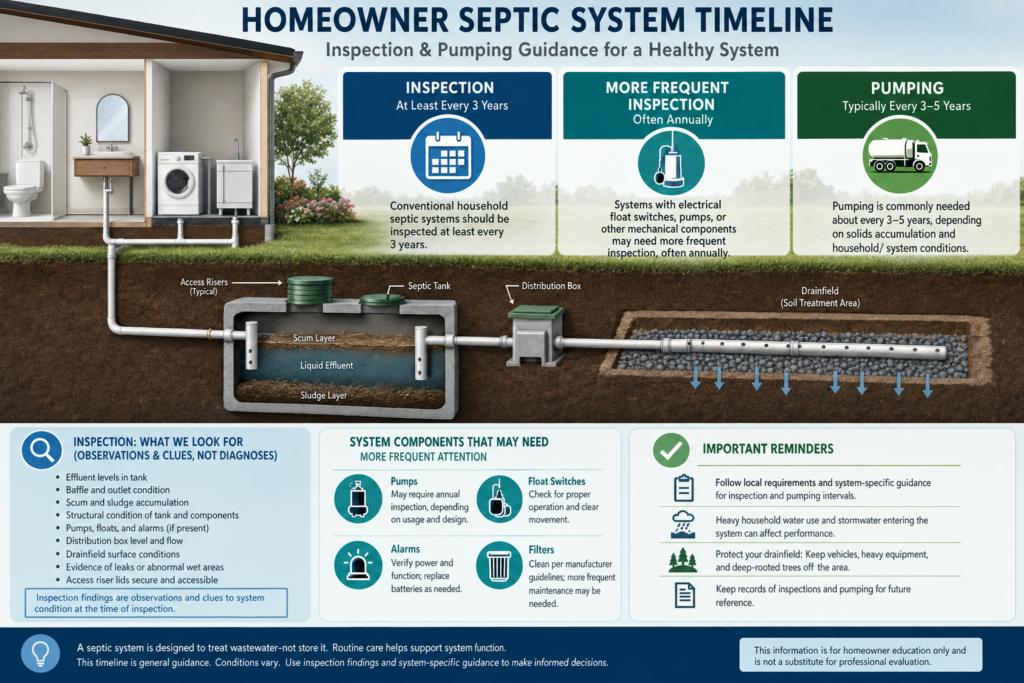
For many conventional household septic systems, inspection at least every 3 years is a commonly used planning guideline. Systems that use electrical float switches, pumps or other mechanical components may need more frequent inspection—often annually. Local requirements, system design, manufacturer guidance and site conditions can call for a different schedule.
Routine Inspections
Many homeowners have their system inspected at the same time it’s pumped, since sludge and scum levels are already being checked and the tank is open and accessible. How often this routine check happens depends on the same household and tank factors that determine pumping frequency; see How Often Should a Septic Tank Be Pumped? for that guidance.
Before Buying or Selling a Home
A septic inspection is a common step in a real estate transaction, giving the buyer a clear picture of the system’s condition before finalizing a purchase. This type of inspection is often more thorough than a routine check and is covered in detail in Septic Inspection Before Buying a House.
After Noticing Warning Signs
Symptoms like slow drains, sewage odors, backups, or standing water over the drain field mean an inspection is worth scheduling regardless of when the last one occurred. These signs and their likely causes are covered in the septic repair content on this site rather than here, since this article focuses on inspection timing rather than diagnosing specific symptoms.
After a Change in Household Use
Significant changes in intended wastewater use may justify reviewing the system’s approved design capacity and observed condition. Home additions, bedroom changes or changes of use may also involve local permitting or design requirements, so capacity should not be judged from current occupant count alone.
Following Extended Vacancy
If a property’s septic-system condition or maintenance history is uncertain after an extended vacancy, an inspection can provide a useful baseline before regular use resumes. The need depends on system type, records, site conditions and local requirements.
Setting a Practical Schedule
For most homeowners, tying routine inspection to the regular pumping schedule covers ongoing needs, while the situational triggers above call for inspection outside of that routine. For what an inspection visit actually involves, see What Happens During a Septic Inspection?.
For a broader overview of septic inspections, see the Septic System Inspection Guide.
Inspection and Pumping Are Different Schedules
Inspection frequency is not the same as pumping frequency. For many households, tank pumping about every 3–5 years is a common planning guideline, but actual pumping needs depend on sludge and scum accumulation, household use, tank size and system characteristics. Follow local requirements and system-specific guidance.
Need Septic Service Help?
Call to discuss your situation and confirm service options, pricing, scheduling, availability, and provider requirements directly.
Referral Disclosure: Septic Service Co is a referral-style informational website. We may help callers connect with independent service providers. We do not perform septic services ourselves. Pricing, availability, response times, warranties, provider capabilities, and service options may vary. Always confirm details directly before scheduling work.