SEPTIC SYSTEM RESOURCE
What Happens During a Septic Inspection
Practical information from Septic Service Co to help you understand septic service options, warning signs, maintenance considerations, and what to confirm with an independent provider.
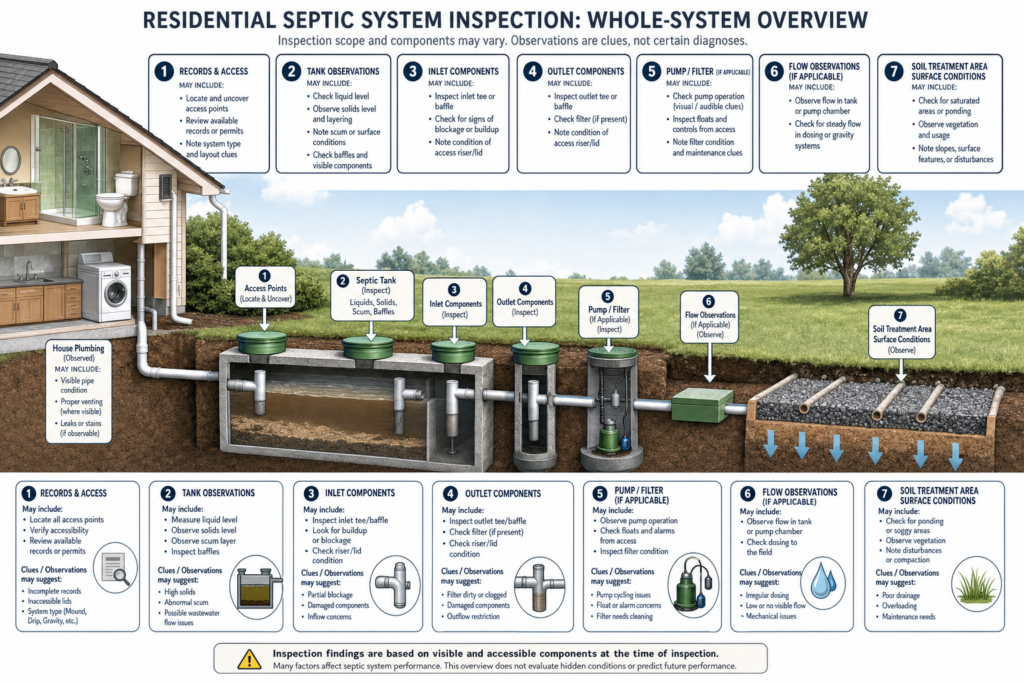
The exact steps in a septic inspection vary by system type, accessibility, local requirements and the purpose of the inspection. A typical inspection may include review of available information, evaluation of accessible tank components, observations of wastewater levels or solids, checks of filters or pumps where applicable, and observation of site conditions associated with the soil treatment area.
Locating the System
The inspector starts by locating the tank, its access points, and the drain field, often using site records, permit diagrams, or probing the yard if no documentation is available. This step alone can take time in homes without a riser or clear record of the system’s layout.
Checking the Tank
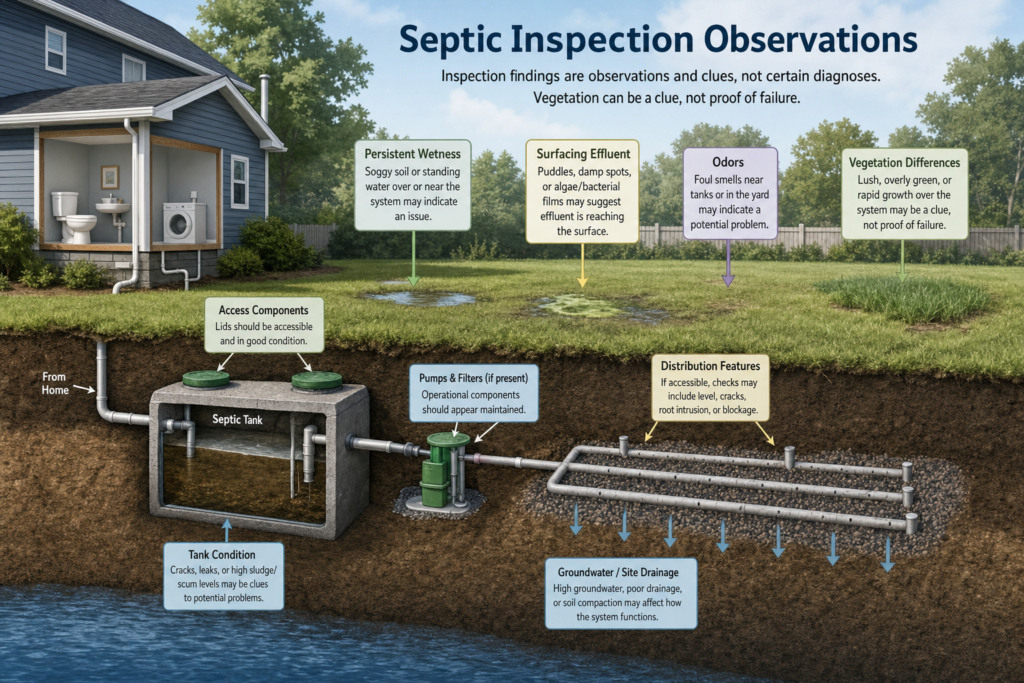
Where access permits, inlet and outlet baffles, tees or other accessible components may be visually evaluated for obvious damage, deterioration or other concerns. Visual observation does not necessarily establish the condition of hidden piping or downstream components.
Testing System Flow
Depending on the inspection method and local requirements, the inspector may observe wastewater flow or perform other functional checks. No single flow observation or dye test establishes the complete condition or future performance of the soil treatment area.
Assessing the Drain Field
The inspection may document accessible and observable conditions associated with the soil treatment area, such as persistent wetness, surfacing wastewater, odors, distribution features where accessible and relevant site drainage conditions. These observations help identify concerns but do not by themselves prove future treatment-area performance.
Reviewing Records and Reporting Findings
A complete inspection typically results in a written report noting the tank’s condition, sludge and scum levels, drain field observations, and any recommended follow-up, such as pumping, repair, or a more detailed assessment of a specific issue.
How This Differs From Pumping
An inspection can be done with or without pumping the tank, though many service visits combine the two since the tank being open for pumping also makes it easier to inspect. See Septic Tank Inspection vs Pumping for how these services relate.
What Inspectors Commonly Find
See Common Septic Inspection Problems for the issues that turn up most often during this process.
For a broader overview of septic inspections, see the Septic System Inspection Guide.
Safety note: Septic tank access and inspection should never involve entering the tank. Tanks are confined spaces that can contain dangerous gases. Keep people and pets away from surfacing wastewater.
Need Septic Service Help?
Call to discuss your situation and confirm service options, pricing, scheduling, availability, and provider requirements directly.
Referral Disclosure: Septic Service Co is a referral-style informational website. We may help callers connect with independent service providers. We do not perform septic services ourselves. Pricing, availability, response times, warranties, provider capabilities, and service options may vary. Always confirm details directly before scheduling work.