
SEPTIC SYSTEM FAQ
Septic Problems & Repair FAQs
Clear homeowner answers about septic systems, with symptoms treated as clues and property-specific decisions left to qualified providers and applicable local requirements.
- Clear homeowner guidance
- Symptoms are clues, not diagnoses
- System and site conditions can vary
- Related guides for deeper planning topics
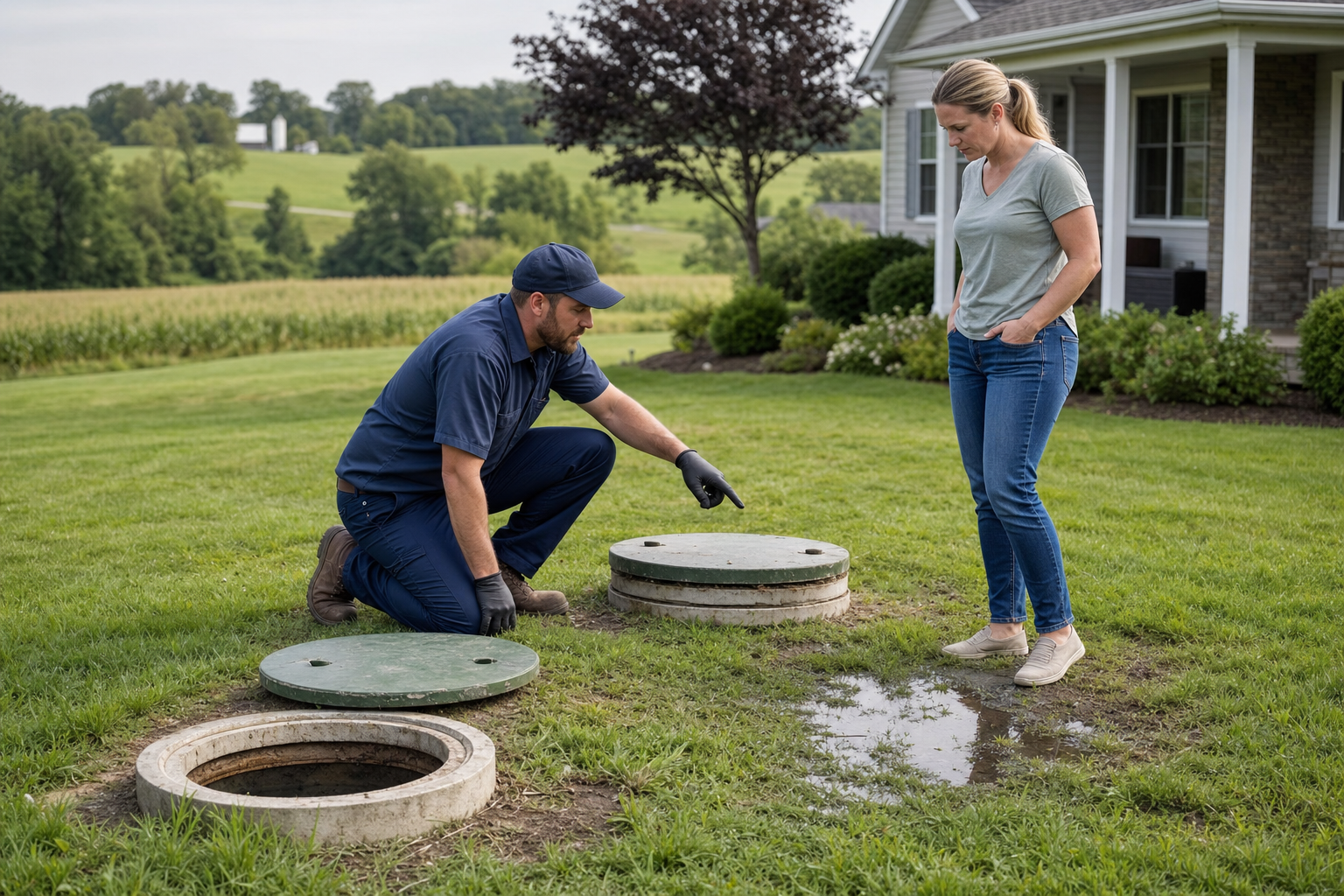
Septic Problems & Repair FAQs
Answers below cover common septic problem symptoms, what a repair evaluation can involve, and how to think about urgency. Septic Service Co is an informational referral resource and does not diagnose or repair septic systems directly. Any symptoms described here are clues to raise with a provider, not a diagnosis, and actual causes, evaluation steps, and repair needs vary by system and site.
Common Symptoms
What are signs that something might be wrong with my septic system?
Possible warning signs can include slow drains, gurgling sounds in pipes, sewage odors indoors or near the system, standing water, unusual vegetation changes over the drain field, or backups inside the home. Each of these can point to different underlying causes, so they’re a reason to have a provider evaluate the system rather than a diagnosis on their own.
Does a bad smell always mean something is broken?
Not necessarily. Odor can result from a range of causes, some minor and some more significant. Treat it as a signal worth investigating rather than an indication of a specific problem.
Can slow drains inside my house be a septic issue rather than a plumbing issue?
It’s possible, but slow drains can also be caused by issues unrelated to the septic system, such as a localized clog. A provider can help determine which is more likely for your situation.
Repair Evaluation
What happens when a provider evaluates a septic problem?
An evaluation can include reviewing the symptoms and system history and assessing relevant accessible components. Pumping or other diagnostic steps may be recommended depending on the system and findings; the process varies by provider and situation.
Will I always get an exact diagnosis on the first visit?
Not necessarily. Some problems are identified quickly, while others require more investigation, especially if the issue involves buried components or the drain field. A provider can tell you more once they’ve started assessing your system.
Urgency Indicators
What situations should be treated as more urgent?
Sewage backing up inside the home or surfacing outdoors can create a sanitation concern and warrants prompt professional attention. A widespread loss of drainage also warrants timely evaluation. Avoid direct contact with sewage and contact an appropriate service provider.
Is it safe to keep using water and plumbing if I notice a problem?
This depends on the severity of the symptoms. If you’re seeing backups or standing sewage, reducing water use until a provider assesses the system is a reasonable precaution. For less severe symptoms, a provider can advise on what’s appropriate while you wait for evaluation.
Repair vs. Replacement
How do I know if a problem is repairable or if the system needs to be replaced?
This depends on what’s causing the problem, the age and condition of the system, and how extensive the damage is. A provider can advise on this only after evaluating your specific system — it isn’t something that can be determined from symptoms alone.
Does an old system automatically mean replacement instead of repair?
Not automatically. Age is only one factor; whether repair or replacement is appropriate depends on the system’s condition, cause of the problem, site conditions, and applicable requirements. If your system does need full replacement, see Septic Installation & Replacement FAQs for more on that process.
Related Questions
If your symptoms seem related to the drain field specifically, such as standing water in the yard, see Drain Field FAQs. If your system has an alarm or pump component, see Septic Alarm & Pump System FAQs. For routine pumping and maintenance not related to a specific problem, see Septic Pumping & Cleaning FAQs. For pricing considerations, see the Septic Repair Cost Guide.
Next Step
To have a symptom evaluated, contact a provider through [INTERNAL-LINK-URL] with a description of what you’re noticing and how long it’s been happening.
Related Septic Guides
Septic Maintenance Guide
Continue to this focused guide for more information.
Need Septic Service Help?
Call to discuss service options and confirm availability, scope, pricing, site requirements, and provider capabilities directly.
Referral Disclosure: Septic Service Co is a referral-style informational website. We may help callers connect with independent service providers. We do not pump, inspect, diagnose, repair, install, replace, or maintain septic systems ourselves. Pricing, availability, response times, provider capabilities, service scope, and local requirements may vary. Always confirm details directly before scheduling work.