
SEPTIC SYSTEM RESOURCE
How Does a Septic System Work
Practical information from Septic Service Co to help you understand septic service options, warning signs, maintenance considerations, and what to confirm with an independent provider.
As effluent moves through suitable unsaturated soil, physical, biological and chemical processes provide additional treatment before the water continues through the environment. Proper siting, soil conditions and system design are important to this treatment process.
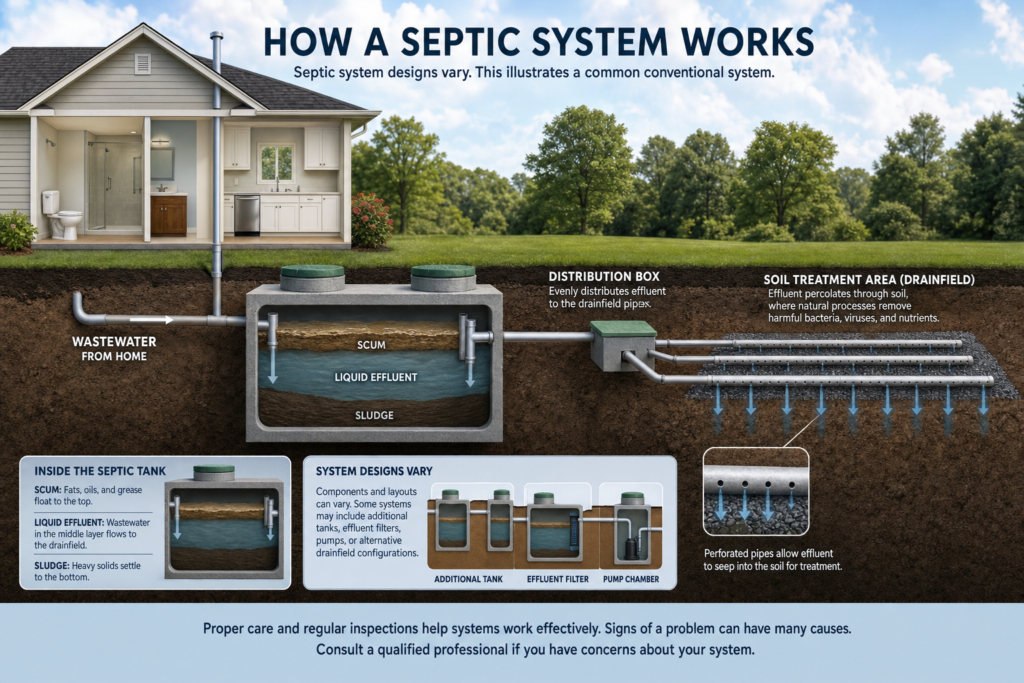
The Main Components
- Inlet pipe: Carries wastewater from the house into the septic tank.
- Septic tank: A buried, watertight container (typically concrete, fiberglass, or plastic) where wastewater sits long enough for solids to separate from liquid.
- Baffles or a T-fitting: Internal structures at the tank’s inlet and outlet that prevent solids and scum from flowing directly into the outlet pipe.
- Outlet pipe: Carries the clarified liquid, called effluent, from the tank to the drain field.
- Drain field (leach field): A network of perforated pipes buried in gravel-filled trenches, where effluent is released gradually and filters down through the soil.
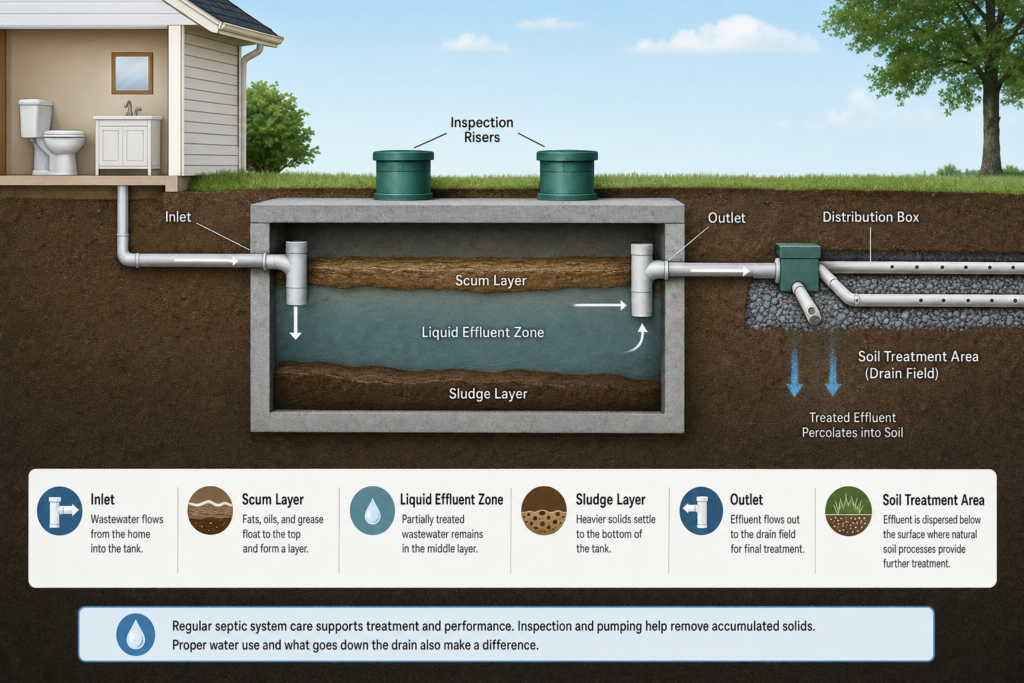
What Happens Inside the Tank
Once wastewater enters the tank, it separates into three layers. Solid waste sinks to the bottom and forms a layer of sludge. Fats, oils, and lighter solids float to the top as scum. Between these layers is the relatively clear liquid effluent, which exits through the outlet pipe once the tank fills enough for more wastewater to displace it. Naturally occurring bacteria in the tank break down some of the solid waste over time, but sludge and scum still accumulate gradually and don’t fully disappear on their own, which is why periodic pumping is necessary.
What Happens in the Drain Field
Effluent leaving the tank flows into the drain field’s network of pipes and disperses into the surrounding gravel and soil. As it filters through the soil, remaining bacteria, organic matter, and some pathogens are naturally broken down or filtered out before the water rejoins the groundwater. A properly functioning drain field relies on the soil having enough capacity to absorb this liquid; a saturated or damaged drain field can no longer treat effluent effectively, which is one of the more serious septic problems a homeowner can face.
Why Maintenance Matters to This Process
Because sludge and scum build up gradually rather than breaking down completely, a tank that’s never pumped will eventually fill to the point where solids start flowing into the drain field, which can clog the soil and cause a costly failure. Routine service keeps the tank from reaching that point; see Common Septic Service Types for what that service generally includes and How Often Should a Septic System Be Serviced? for guidance on timing.
For a broader overview of septic system care, see the Septic Service Guide.
Need Septic Service Help?
Call to discuss your situation and confirm service options, pricing, scheduling, availability, and provider requirements directly.
Referral Disclosure: Septic Service Co is a referral-style informational website. We may help callers connect with independent service providers. We do not perform septic services ourselves. Pricing, availability, response times, warranties, provider capabilities, and service options may vary. Always confirm details directly before scheduling work.