
SEPTIC SYSTEM RESOURCE
Heavy Rain and Septic Systems in Ohio
Practical information from Septic Service Co to help you understand septic service options, warning signs, maintenance considerations, and what to confirm with an independent provider.
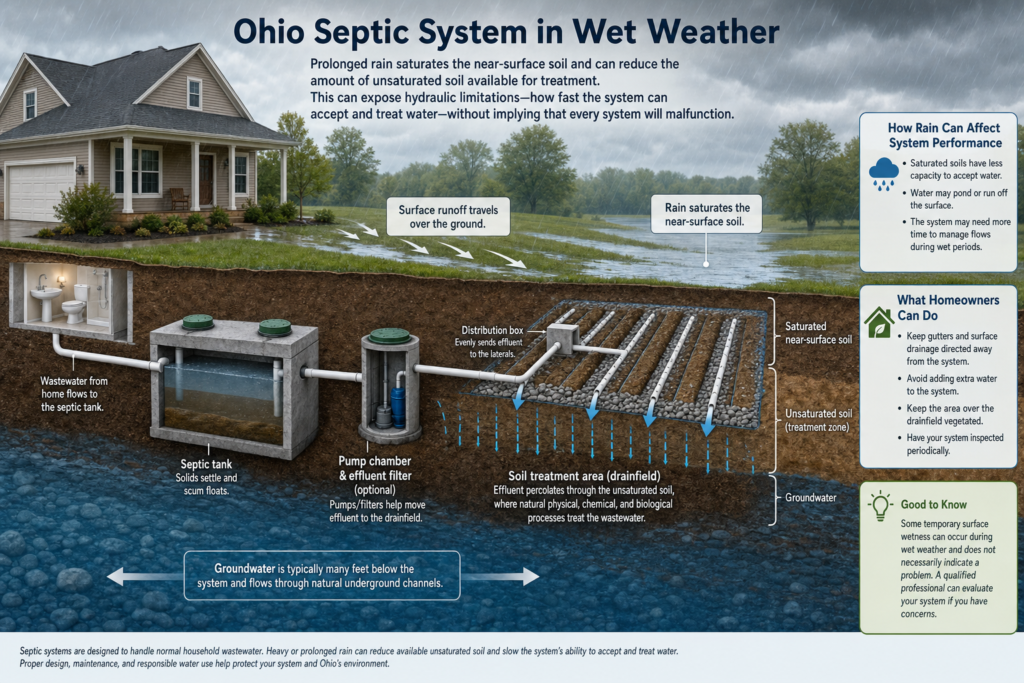
Prolonged or unusually heavy rain can affect septic-system site conditions in Ohio, especially where soils become saturated or groundwater rises. Wet weather can reduce the amount of unsaturated soil available for wastewater treatment and dispersal and may expose limitations in a system that is already hydraulically stressed. Rain alone does not mean a septic system has failed.
Why Saturated Soil Affects the Drain Field
The soil treatment area relies on suitable site and soil conditions for wastewater dispersal and treatment through physical, biological and chemical processes. Prolonged saturation can change those conditions, but the effect varies with system design, soil, groundwater and site drainage.
Signs Heavy Rain Is Affecting Your System
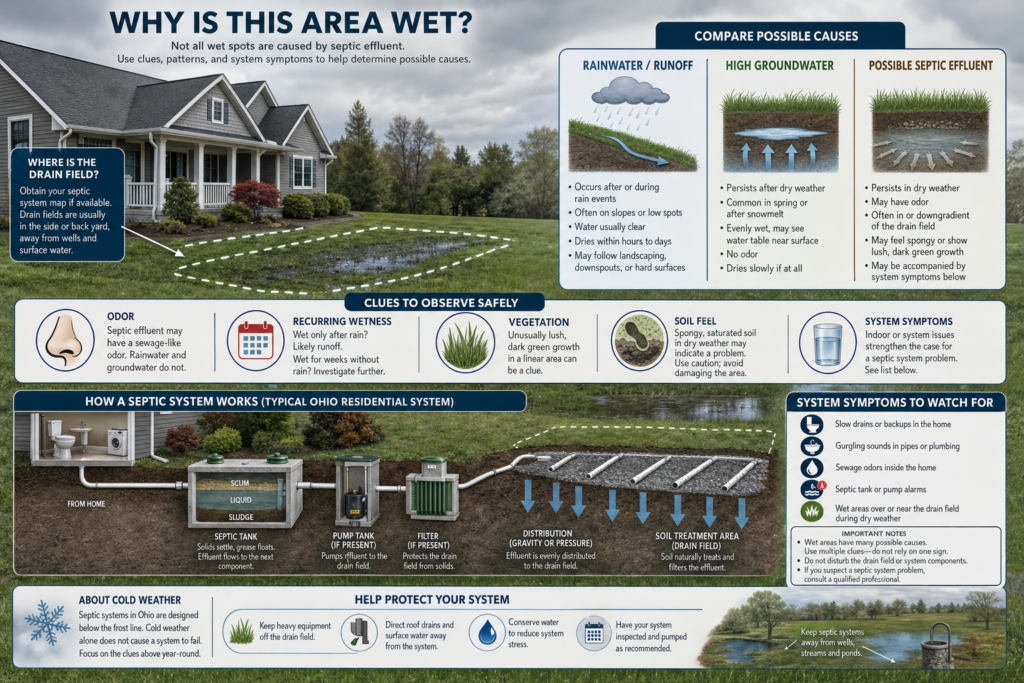
Slower drains, a stronger odor near the drain field, or standing water over the field during or after a heavy rain event are worth noting, especially if they resolve once the ground dries out. If these signs persist well beyond the rain event itself, the drain field may have an underlying issue independent of the weather; see Septic Drain Field Warning Signs for how to tell the difference.
Reducing Water Use During Wet Periods
Since the drain field has less absorption capacity when the surrounding soil is already saturated, reducing non-essential water use during extended heavy rain—spacing out laundry loads, limiting long showers—gives the system more breathing room until conditions improve.
Grading and Surface Water Considerations
Surface water that pools or drains toward the drain field from elsewhere on the property adds to the burden the field already carries during rain. Confirming that gutters, downspouts, and general yard grading direct water away from the drain field, rather than toward it, reduces how much additional surface water compounds the effect of the rain itself.
When It Becomes a Bigger Concern
Temporary symptoms during unusually wet conditions can occur, but recurring slow drains, backups, sewage odors or suspected surfacing wastewater deserve evaluation rather than being assumed to be a normal seasonal condition.
For seasonal maintenance timing, see Ohio Septic System Maintenance Tips. For a broader overview of septic service considerations for Ohio homeowners, see the Ohio Septic Service Guide.
Wet ground after a storm is not automatically septic effluent. Rainfall, surface runoff, groundwater, grading and other leaks can also create wet areas. Keep people and pets away from suspected sewage or surfacing effluent and arrange evaluation when wetness is accompanied by sewage odor, backups or other septic symptoms.
Need Septic Service Help?
Call to discuss your situation and confirm service options, pricing, scheduling, availability, and provider requirements directly.
Referral Disclosure: Septic Service Co is a referral-style informational website. We may help callers connect with independent service providers. We do not perform septic services ourselves. Pricing, availability, response times, warranties, provider capabilities, and service options may vary. Always confirm details directly before scheduling work.