
SEPTIC SYSTEM RESOURCE
Winter Septic Problems in Ohio
Practical information from Septic Service Co to help you understand septic service options, warning signs, maintenance considerations, and what to confirm with an independent provider.
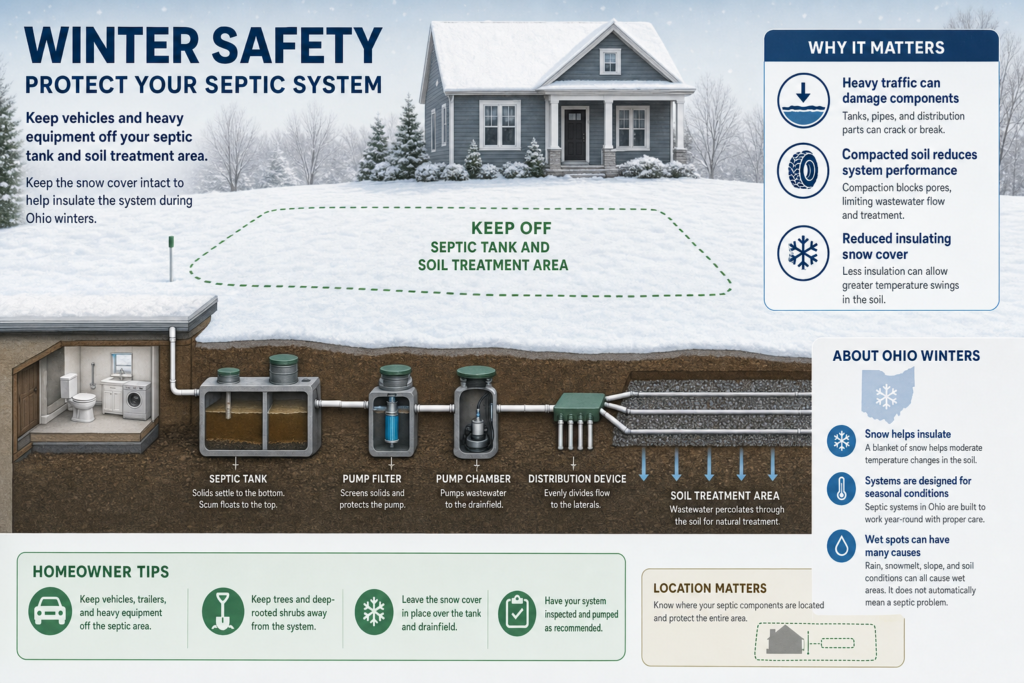
Avoid unnecessary vehicle traffic or heavy compaction over septic tanks, buried components and the soil treatment area. Heavy loads can damage components or compact soil, and compacted or removed snow can reduce some of the insulating benefit of undisturbed snow cover.
Frozen Pipes and Tank Lids
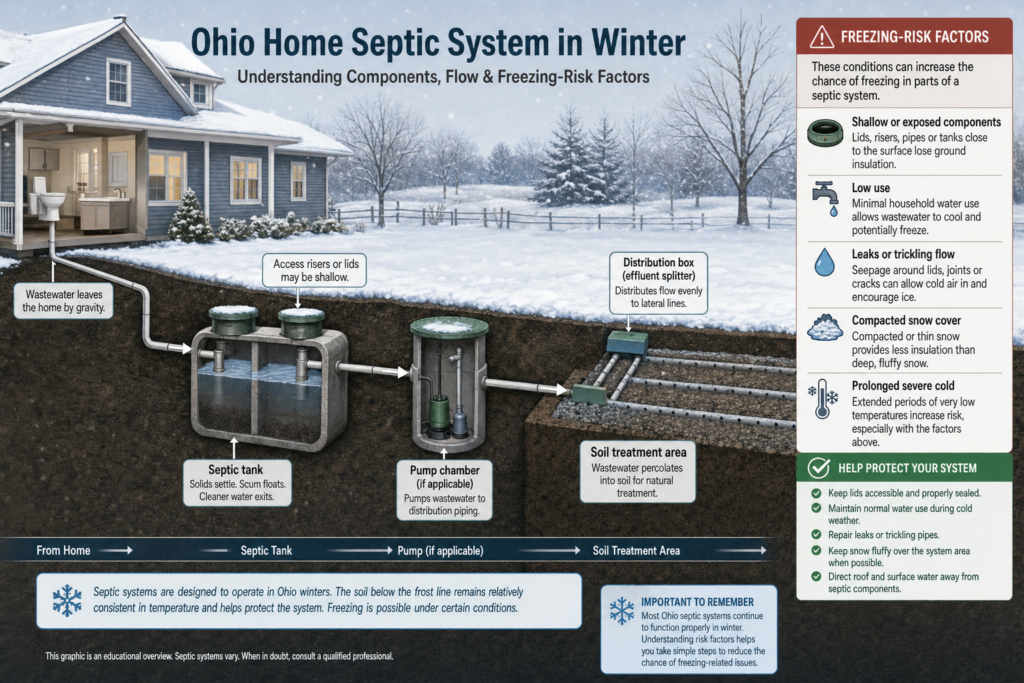
Snow, ice or frozen soil around a septic access lid can create a service-access problem without meaning the wastewater inside the system has frozen. Avoid damaging the lid or riser while trying to expose it, and follow service-provider guidance for safe winter access.
Reduced Bacterial Activity
Continue normal household use during cold weather while avoiding unnecessary hydraulic loading. Do not add extra water, septic additives or other products in an attempt to keep the system warm or increase bacterial activity. Address leaks because small continuous flows can also contribute to icing or freezing problems in some exposed or shallow components.
Snow Cover and the Drain Field
Avoid unnecessary vehicle traffic or heavy compaction over septic tanks, buried components and the soil treatment area. Heavy loads can damage components or compact soil, and compacted or removed snow can reduce some of the insulating benefit of undisturbed snow cover.
Frozen Ground Reducing Drain Field Absorption
If the ground above the drain field does freeze significantly, it can behave similarly to how it does during spring snowmelt—temporarily reducing the soil’s ability to absorb effluent. This is generally a short-term issue tied to how cold the ground gets and how well it’s been insulated, rather than a sign of permanent drain field damage.
Difficulty Accessing the System for Service
Avoid unnecessary vehicle traffic or heavy compaction over septic tanks, buried components and the soil treatment area. Heavy loads can damage components or compact soil, and compacted or removed snow can reduce some of the insulating benefit of undisturbed snow cover.
If a Backup or Overflow Happens in Winter
Cold weather doesn’t change the basic response to an active backup or overflow; see What to Do if Sewage Backs Up and What Causes Septic Backups? for that guidance, since winter conditions are one of several possible contributing factors rather than a separate category of emergency response.
For seasonal maintenance timing, see Ohio Septic System Maintenance Tips. For a broader overview of septic service considerations for Ohio homeowners, see the Ohio Septic Service Guide.
Do Not Use Improvised Thawing Methods
If a septic line or component is suspected of being frozen, do not use open flames or torches, pour chemicals into the system, improvise electrical heating, dig blindly around buried components, or enter a septic tank or pump chamber. These approaches can create fire, electrical, structural, confined-space or wastewater-exposure hazards. If backup symptoms occur, reduce unnecessary wastewater use and arrange professional evaluation.
Need Septic Service Help?
Call to discuss your situation and confirm service options, pricing, scheduling, availability, and provider requirements directly.
Referral Disclosure: Septic Service Co is a referral-style informational website. We may help callers connect with independent service providers. We do not perform septic services ourselves. Pricing, availability, response times, warranties, provider capabilities, and service options may vary. Always confirm details directly before scheduling work.