
SEPTIC SYSTEM RESOURCE
How Often Should a Septic System Be Serviced
Practical information from Septic Service Co to help you understand septic service options, warning signs, maintenance considerations, and what to confirm with an independent provider.
For many households, a commonly used planning guideline is to have the septic tank evaluated and typically pumped about every 3–5 years. That is not a mandatory interval. Actual pumping frequency depends on household size, wastewater volume, solids entering the system, garbage-disposal use, tank size and system characteristics. Inspection findings and measured sludge/scum accumulation provide better guidance than the calendar alone.
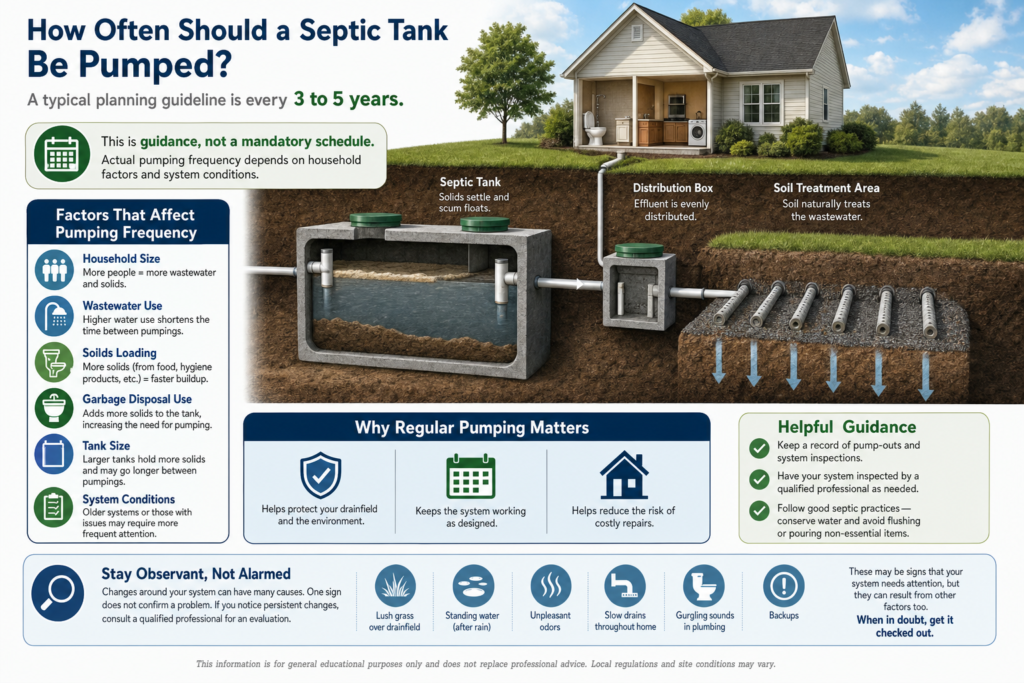
Factors That Affect the Right Interval
- Household size: More people generate more wastewater and solid waste, which fills the tank faster and shortens the time between needed services.
- Tank size: A larger tank holds more capacity before sludge and scum reach a level requiring pumping, while a smaller or older tank may need more frequent attention.
- Water usage habits: High water usage from long showers, frequent laundry, or a garbage disposal that adds more solids to the tank all increase how quickly the system fills.
- Whether the home is used seasonally or year-round: A vacation home used only part of the year naturally needs less frequent service than a full-time residence of the same size.
Routine Service vs. Reacting to a Problem
Servicing on a routine schedule—based on the factors above rather than waiting for a visible issue—is generally more effective than reacting once a problem develops, since damage to the drain field from a neglected tank can be far more costly and disruptive to fix than routine pumping would have been. That said, certain symptoms mean service is needed regardless of when the last service occurred; see Signs a Septic System Needs Service.
Getting a Schedule That Fits Your System
Because tank size and household factors vary so much, a septic professional can measure actual sludge and scum levels during an inspection and use that, along with your household’s usage patterns, to recommend a specific interval for your system rather than relying on a generic timeline. For what that service typically involves, see Common Septic Service Types, and for the distinction between pumping and more thorough cleaning, see Septic Tank Cleaning vs Pumping.
For a broader overview of septic system care, see the Septic Service Guide.
Need Septic Service Help?
Call to discuss your situation and confirm service options, pricing, scheduling, availability, and provider requirements directly.
Referral Disclosure: Septic Service Co is a referral-style informational website. We may help callers connect with independent service providers. We do not perform septic services ourselves. Pricing, availability, response times, warranties, provider capabilities, and service options may vary. Always confirm details directly before scheduling work.