
SEPTIC SYSTEM RESOURCE
Ohio Septic System Maintenance Tips
Practical information from Septic Service Co to help you understand septic service options, warning signs, maintenance considerations, and what to confirm with an independent provider.
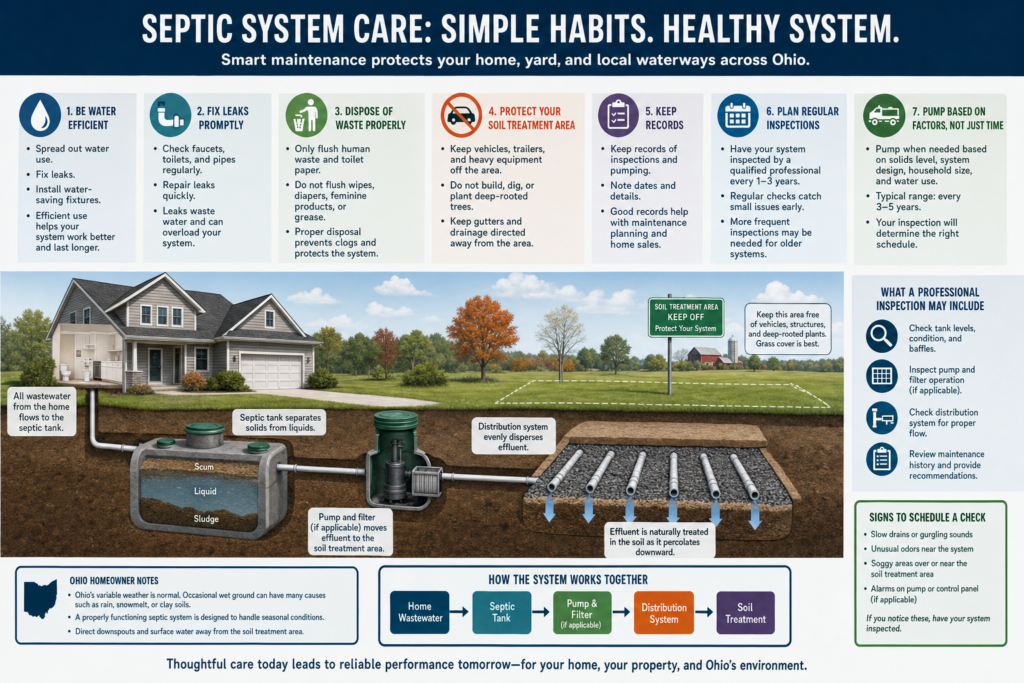
Good septic maintenance in Ohio is built around regular inspection, pumping when solids accumulation indicates it is needed, efficient water use, proper waste disposal and protecting the soil treatment area. Seasonal weather can affect access and site conditions, but homeowners do not need to add extra water or products to “support” septic bacteria during winter.
Before Winter: Protect Against Freezing
Before the coldest stretch of the year, confirm the tank lid and any exposed pipes are adequately covered and insulated, since a frozen lid or line can make accessing or servicing the system difficult when you need to. Avoid heavy foot or vehicle traffic that compacts snow over the tank and drain field, since compacted snow actually insulates less effectively than loose snow, which can increase the risk of freezing underneath. See Winter Septic Problems in Ohio for the specific cold-weather issues to watch for.
During Winter: Maintain Steady, Moderate Use
Continue normal household water use during cold weather while avoiding unnecessary hydraulic loading. There is no need to add extra water, hot water or septic additives in an attempt to keep the system warm or increase bacterial activity. Fix leaks and spread unusually large water-use activities when practical.
Before Spring: Prepare for Wet Weather
As Ohio moves into its wetter spring months, the ground around the drain field can become saturated from rain and snowmelt, temporarily reducing its ability to absorb effluent. Confirming the system is in good working order before this seasonal increase in demand—rather than during it—gives you a better chance of catching a developing problem early. See Heavy Rain and Septic Systems in Ohio for how wet weather affects the system.
Ongoing: Keep Up With Routine Pumping and Inspection
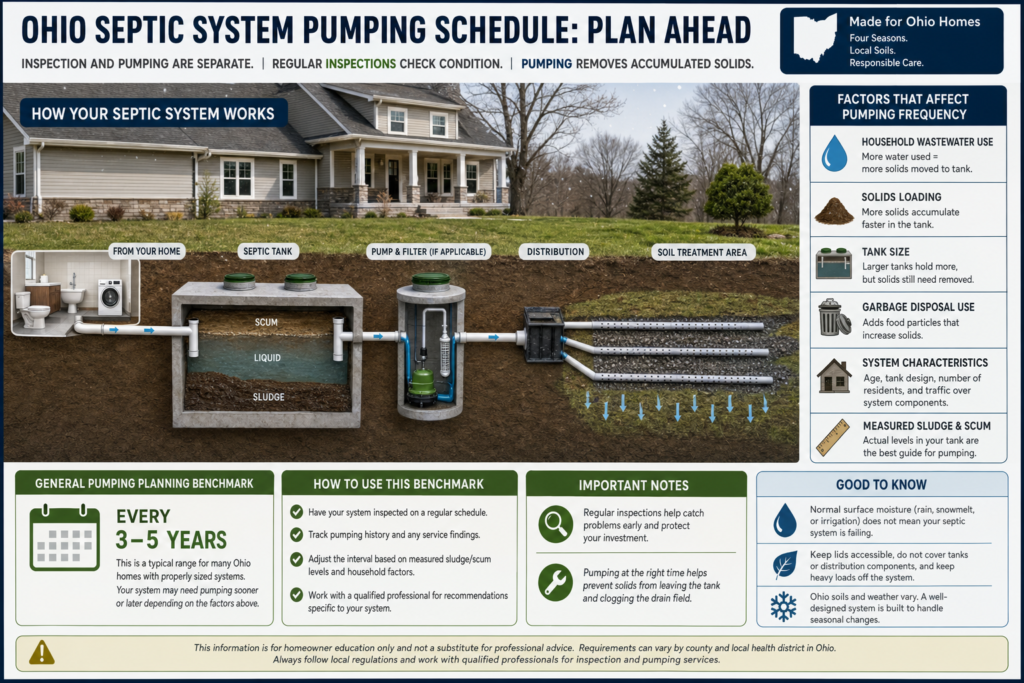
Household septic tanks are commonly pumped on roughly a 3–5 year planning interval, but actual timing varies. Important factors include total wastewater use, solids loading, septic tank size, garbage-disposal use, system characteristics, measured sludge and scum levels and maintenance history. Follow local requirements and system-specific guidance.
Watch for Signs Regardless of Season
Slow drains, odors, or backups are worth addressing whenever they appear rather than waiting for a seasonal checkpoint. See Signs a Septic System Needs Service for what to watch for.
Planning Service Around Ohio’s Seasons
For a broader look at scheduling and coordinating septic service around these seasonal patterns, see Ohio Septic Service Planning.
For a broader overview of septic service considerations for Ohio homeowners, see the Ohio Septic Service Guide.
Need Septic Service Help?
Call to discuss your situation and confirm service options, pricing, scheduling, availability, and provider requirements directly.
Referral Disclosure: Septic Service Co is a referral-style informational website. We may help callers connect with independent service providers. We do not perform septic services ourselves. Pricing, availability, response times, warranties, provider capabilities, and service options may vary. Always confirm details directly before scheduling work.