
SEPTIC SYSTEM RESOURCE
When Is a Septic Problem an Emergency
Practical information from Septic Service Co to help you understand septic service options, warning signs, maintenance considerations, and what to confirm with an independent provider.
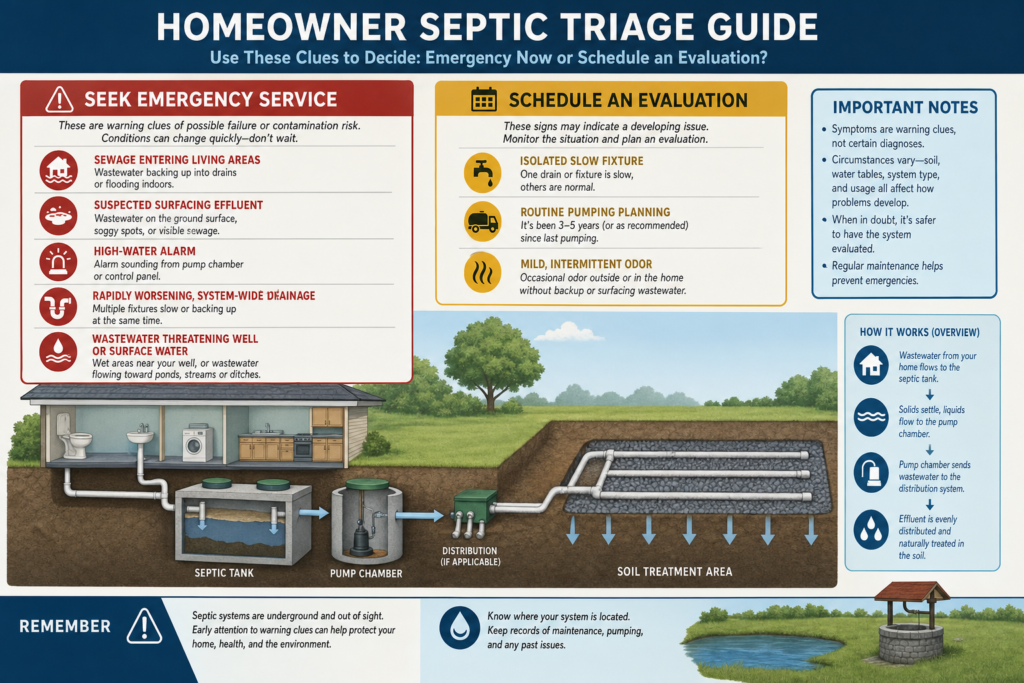
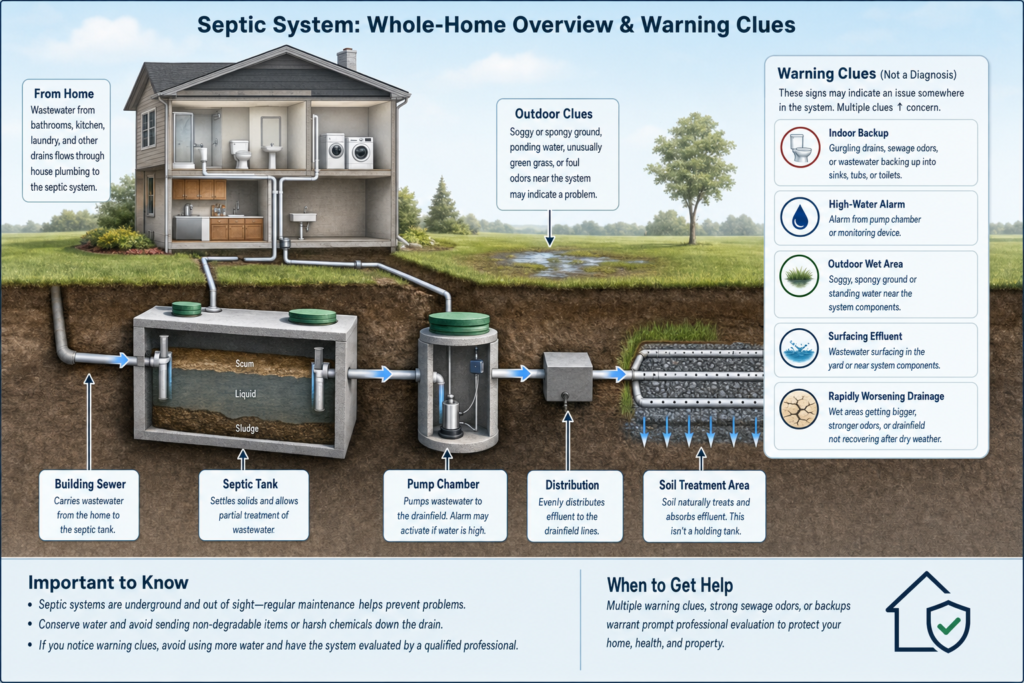
A septic problem generally deserves prompt attention when wastewater is entering occupied areas, suspected septic effluent is surfacing outdoors, a high-water alarm activates, system-wide drainage is rapidly worsening, or wastewater threatens a drinking-water well, surface water, drainageway or another sensitive area. Other symptoms may be appropriate for scheduled evaluation depending on severity and circumstances.
Situations That Call for Immediate Attention
- Sewage backing up into sinks, tubs, or toilets, which risks contamination and property damage the longer it continues. See What to Do if Sewage Backs Up.
- Effluent surfacing in the yard over the tank or drain field, indicating an active overflow rather than a developing issue. See Septic Overflow Warning Signs.
- A high-water alarm activating on systems equipped with one, which is specifically designed to flag an urgent situation.
- Rapidly worsening symptoms—drains going from slightly slow to barely functional within a day or two—suggesting the system is close to failing outright rather than gradually needing service.
Situations That Can Typically Wait for Routine Service
- A single slow drain that’s been gradually worsening over weeks, especially if it’s isolated to one fixture
- A tank that’s due for pumping based on your regular schedule, without any accompanying backup or overflow symptoms
- Mild, occasional odor without other symptoms, which can often be scheduled as a routine inspection rather than an emergency call
What Makes the Difference
A high-water alarm indicates an abnormal condition that warrants prompt attention, but it does not by itself prove that sewage is already overflowing. Minimize water use, follow manufacturer guidance if available, and arrange evaluation without reaching into a pump chamber or repeatedly resetting the alarm.
If You’re Not Sure
When it’s unclear whether a symptom qualifies as an emergency, treating it with caution—limiting water use and contacting a professional promptly to assess the situation—is a reasonable default rather than waiting to see if it worsens. See What to Do During a Septic Emergency for the immediate steps to take while you sort out the urgency of your specific situation.
For a broader overview of handling septic emergencies, see the Emergency Septic Service Guide.
Need Septic Service Help?
Call to discuss your situation and confirm service options, pricing, scheduling, availability, and provider requirements directly.
Referral Disclosure: Septic Service Co is a referral-style informational website. We may help callers connect with independent service providers. We do not perform septic services ourselves. Pricing, availability, response times, warranties, provider capabilities, and service options may vary. Always confirm details directly before scheduling work.