
SEPTIC SYSTEM RESOURCE
What to Do During a Septic Emergency
Practical information from Septic Service Co to help you understand septic service options, warning signs, maintenance considerations, and what to confirm with an independent provider.
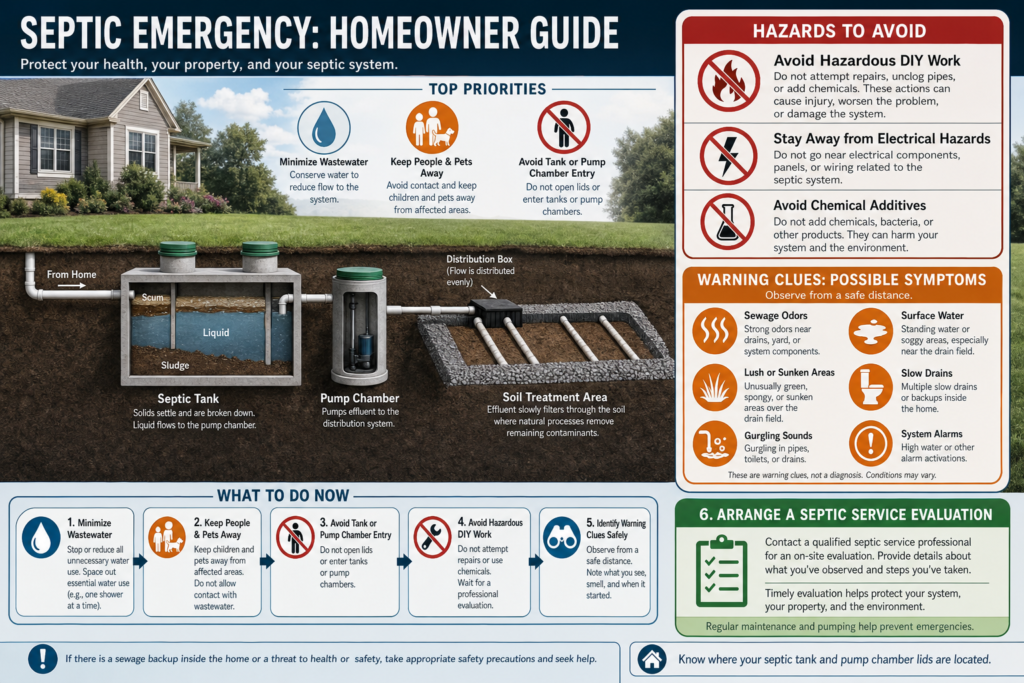
During a septic emergency, the priorities are to stop adding wastewater to the system, keep people and pets away from any exposed sewage, and get a professional involved quickly, since delays can turn a contained problem into a larger cleanup or health hazard. The exact steps depend on whether you’re dealing with a backup inside the house, an overflow in the yard, or signs that a failure is starting, but the immediate response follows the same basic pattern.
Stop Using Water and Plumbing Fixtures
Every flush, shower, or load of laundry adds more wastewater to a system that’s already struggling to handle what it has. Pause all non-essential water use until the situation is resolved or a professional has assessed it. See Can You Use Water During a Septic Emergency? for more detail on what to avoid and for how long.
Keep People and Pets Away From Exposed Sewage
Untreated wastewater carries bacteria and other pathogens, so avoid direct contact with any sewage that has backed up indoors or surfaced in the yard. Keep children and pets away from affected areas until it’s cleaned up and the underlying issue is addressed.
Identify What Type of Problem You’re Facing
How you respond next depends on where the problem is showing up:
- Sewage backing up into the house through drains or toilets calls for specific handling; see What to Do if Sewage Backs Up.
- Effluent surfacing in the yard or over the drain field points to overflow; see Septic Overflow Warning Signs for how to recognize this specifically.
Avoid Attempting Major Repairs Yourself
Opening the septic tank, attempting to unclog a main line, or trying to address a drain field problem without proper training and equipment carries real safety risks, including exposure to hazardous gases inside the tank. These situations call for a professional rather than a DIY fix.
Call a Professional
Once you’ve limited water use and kept the area safe, contacting a professional to assess and address the problem is the next step. Not every septic issue rises to the level of an emergency call versus a scheduled visit; see When Is a Septic Problem an Emergency? to help gauge the urgency of your specific situation.
For a broader overview of handling septic emergencies, see the Emergency Septic Service Guide.
Safety boundary: Never enter a septic tank or pump chamber. Avoid opening septic components or attempting electrical, pump, main-line or drain-field repairs during an emergency. Septic tanks and chambers can contain dangerous gases, contaminated wastewater and electrical hazards.
Need Septic Service Help?
Call to discuss your situation and confirm service options, pricing, scheduling, availability, and provider requirements directly.
Referral Disclosure: Septic Service Co is a referral-style informational website. We may help callers connect with independent service providers. We do not perform septic services ourselves. Pricing, availability, response times, warranties, provider capabilities, and service options may vary. Always confirm details directly before scheduling work.