
SEPTIC SYSTEM RESOURCE
What Happens During Septic Tank Pumping
Practical information from Septic Service Co to help you understand septic service options, warning signs, maintenance considerations, and what to confirm with an independent provider.
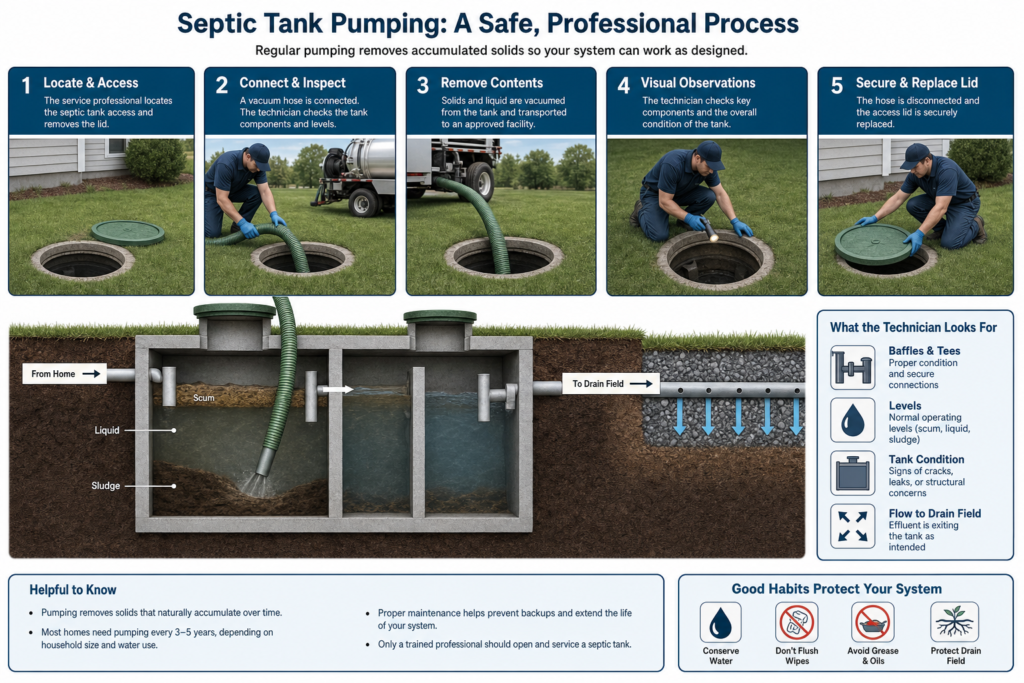
Septic tank pumping involves a technician locating and uncovering the tank’s access point, inserting a large hose connected to a vacuum truck, and removing the liquid, sludge, and scum from inside. Most visits also include a basic visual check of the tank’s condition while it’s open, since this is one of the easier times to spot problems that aren’t visible once the tank is covered again.
Step-by-Step Process
- Locating the tank and access point: The technician finds the tank’s lid or riser, which may be buried under a few inches of soil if there’s no riser extending to ground level.
- Uncovering the access point: The lid is uncovered and opened, whether that means digging down to a buried lid or simply removing a riser cover that’s already at grade.
- Inserting the vacuum hose: A hose from the pump truck is lowered into the tank to remove its contents.
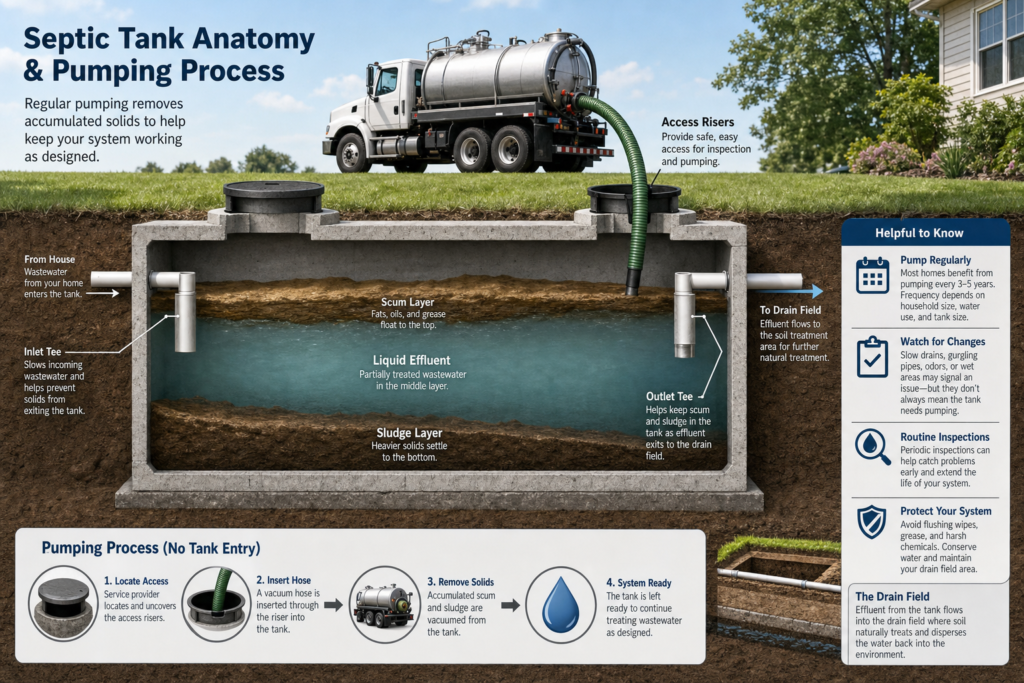
- Removing liquid, sludge, and scum: The truck’s vacuum pulls out the tank’s contents, typically working through the scum layer, the liquid, and the settled sludge at the bottom.
- Visual inspection: With the tank open and mostly empty, the technician can check the condition of the baffles, look for cracks or damage, and confirm the inlet and outlet are functioning correctly.
- Closing the tank: The lid or riser cover is replaced, and if the access point was buried, the soil is typically backfilled over it once again.
What’s Typically Checked During the Visit
Since the tank is already open, a pumping visit is a practical time to check for issues that would otherwise go unnoticed, such as a damaged baffle, an inlet or outlet blockage, or early signs the tank itself is deteriorating. If something concerning is found, it may lead to a broader inspection or repair recommendation beyond the pumping itself; see Common Septic Service Types for how these different services relate to one another.
How Long Access Takes
How quickly the process moves largely depends on how easy the tank is to access. A tank with a riser already extending to ground level allows the technician to get started right away, while a buried lid requires locating and digging it out first, adding time before the actual pumping can begin. Making the access point easy to reach ahead of time can streamline the visit; see How to Prepare for Septic Tank Pumping for how to do that.
For a broader overview of septic tank pumping, see the Septic Tank Pumping Guide.
Safety note: Septic tank access and pumping should never involve a homeowner entering the tank. Septic tanks are confined spaces that may contain dangerous gases and other hazards.
Need Septic Service Help?
Call to discuss your situation and confirm service options, pricing, scheduling, availability, and provider requirements directly.
Referral Disclosure: Septic Service Co is a referral-style informational website. We may help callers connect with independent service providers. We do not perform septic services ourselves. Pricing, availability, response times, warranties, provider capabilities, and service options may vary. Always confirm details directly before scheduling work.